
Why Wellen Park pavers are showing wear already - what new construction sand and sealer choices mean for your first restoration
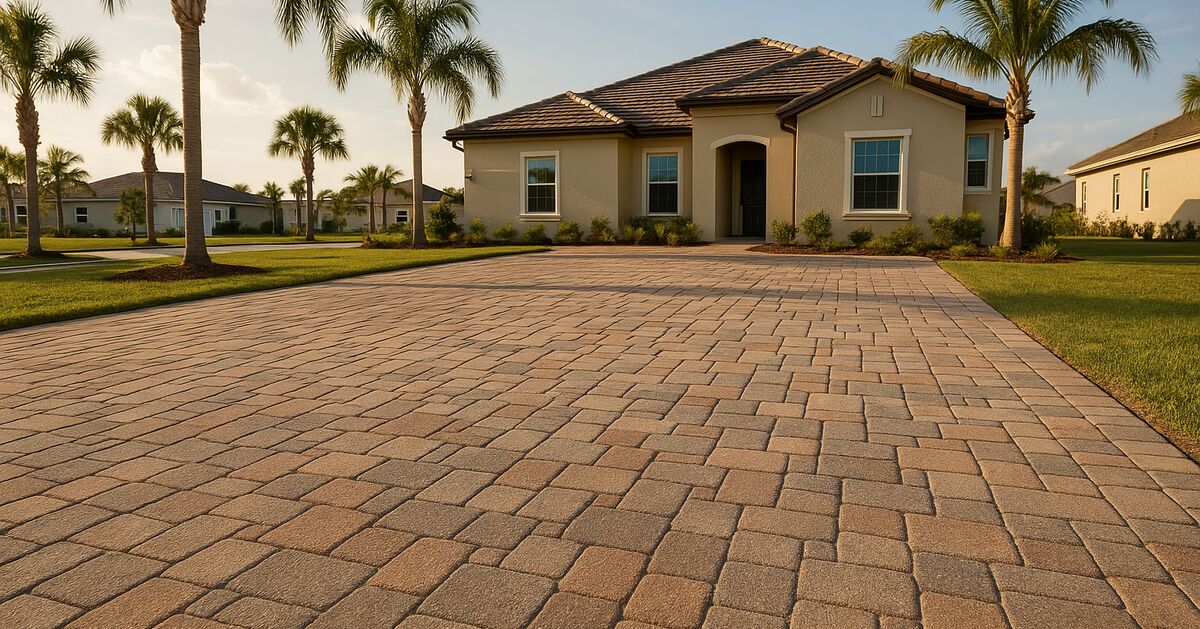
Your pavers are less than three years old and they already look tired. If you live in Wellen Park, you are far from alone in noticing this, and the reasons have almost nothing to do with how you care for your home.
Wellen Park is one of the fastest-growing planned communities on Florida's Gulf Coast, which means thousands of homes were finished in quick succession, often with paver work completed under tight builder schedules, in summer heat, and with material and labor choices made for speed rather than long-term performance. Understanding what actually happened during installation, and what your pavers need now, will save you money and prevent you from repeating the same mistakes on your first restoration.
The builder timeline problem
Production homebuilders in communities like Wellen Park are working to a schedule measured in weeks, not months. Paver subcontractors are often contracted to complete driveways, walkways, and lanai surfaces within a very narrow window. That pressure creates a chain of compromises that show up years later in your pavers.
The first compromise is joint sand. Most production builds use basic dry-cut or kiln-dried sand between paver joints rather than polymeric sand. Kiln-dried sand is inexpensive, easy to sweep in, and perfectly adequate for the final inspection photo. It is not, however, adequate for the Gulf Coast climate. Southwest Florida's afternoon thunderstorms, irrigation overspray, and tropical humidity wash kiln-dried sand out of joints faster than most homeowners expect, sometimes within the first rainy season.
When joint sand washes out, pavers lose lateral stability. Individual units begin to shift, rock, or settle unevenly. The surface starts to look wavy rather than flat. Water pools in low spots. Weeds and algae find a foothold in the open joints. By year two or three, a Wellen Park driveway or lanai can look like it has ten years of wear on it, even when it is structurally sound underneath.
The second compromise is sealer - or the absence of it. Some builders apply a light sealer coat as a cosmetic finishing touch before closing. Others skip it entirely. When a sealer is applied, it is often a thin, single-coat application done immediately after installation, sometimes before the pavers have fully cured or before efflorescence has had a chance to work its way out of the concrete units. How Gulf Coast heat and humidity affect paver sealer cure time explains in detail why rushing the sealing step causes problems that compound over time.
Why efflorescence is almost guaranteed on new pavers
Concrete-based pavers - which is what the overwhelming majority of Wellen Park homes have - contain calcium compounds that migrate to the surface as moisture moves through the unit. This process, called efflorescence, is completely normal and is not a defect. It typically peaks in the first twelve to eighteen months after installation.
The problem is that if a builder applies sealer before efflorescence has run its course, the sealer traps those calcium salts just below or within the sealer film. The result is a hazy, whitish, blotchy appearance that many homeowners mistake for a bad sealer product. In reality, the timing was wrong. No amount of cleaning the surface will fix trapped efflorescence once it is sealed in - the old sealer has to come off first.
If your Wellen Park pavers look dull or have a white, chalky cast even after cleaning, this is likely what you are dealing with. The good news is that it is fixable. The first step is stripping the existing sealer, allowing any remaining efflorescence to fully release, and then starting fresh with a proper application. When old paver sealer clouds, peels, or traps moisture: why stripping is the only real fix covers that process in full if you want to understand what stripping actually involves before committing to it.
The sand question: what your first restoration must address
Joint sand is not a minor detail. It is the structural glue of a flexible paver system. Without intact joint sand, you do not have a paver surface - you have a collection of loose concrete units resting on a base. The difference matters because:
- Pavers without adequate joint sand shift under load, which is why you see tire tracks and rocking units on driveways.
- Open joints allow water to penetrate directly to the base material, accelerating settlement.
- Without sand filling the joints, sealer has nowhere to form a proper edge seal, so moisture still gets in from the sides.
- Weeds and algae colonize open joints quickly in our climate, making the problem worse with every season.
For most Wellen Park homeowners doing their first restoration, the right answer is polymeric sand rather than a simple kiln-dried re-sand. Polymeric sand contains binding agents that activate with water and then cure into a semi-firm joint filler that resists washout, resists weed germination, and holds pavers in position far better than plain sand. Re-sanding vs. polymeric sand: which does your Gulf Coast pavers need before sealing? breaks down the tradeoffs in detail, but for new-construction pavers that started with kiln-dried sand, polymeric is almost always the better long-term investment.
One important note: polymeric sand must be installed correctly. Improper activation, leftover haze on the paver surface, or sealing before the polymeric sand has fully cured will create new problems. This is one of the most common DIY mistakes on restoration jobs, and it is genuinely difficult to reverse without stripping everything and starting over.
What the Wellen Park landscape does to pavers year-round
Beyond the construction shortcuts, Wellen Park's physical environment accelerates wear in ways that apply to every home in the community, regardless of how well the original installation was done.
The community is built around a network of lakes, retention ponds, and stormwater features. Homes near water - and most Wellen Park lots are within a short distance of some water feature - see higher ambient humidity and more airborne algae spore load than homes further inland. Algae establishes on pavers faster and returns more quickly after cleaning when moisture is consistently in the air. This is the same phenomenon we see on waterfront properties throughout the Venice, Nokomis, and Palmer Ranch areas: paver sealing and restoration in Venice and paver sealing and restoration in Nokomis both come with notes about managing algae in high-humidity, near-water settings.
Wellen Park also has a substantial CDD (Community Development District) assessment structure, which many homeowners are aware of through their tax bills. What is less widely understood is that CDD communities also have detailed deed restriction standards for paver and driveway appearance. A surface that looks fine to you may already be approaching the threshold where an HOA or CDD violation notice is issued. Staying ahead of that with a proper first restoration is much easier than scrambling to fix a problem after receiving a letter.
The intense Southwest Florida sun is a factor as well. UV exposure bleaches the pigment out of concrete pavers over time, and this happens faster on west and south-facing surfaces. A driveway that faces west gets direct afternoon sun for four to six hours a day in the summer months. Without UV-blocking sealer, color fade is significant within the first two to three years - exactly the timeframe when most Wellen Park homeowners are realizing their pavers already need attention.
What a first restoration for Wellen Park pavers should actually look like
A proper first restoration is not a pressure wash and a coat of sealer. Done correctly, it involves several distinct steps, and skipping any of them means you will be back at square one sooner than you should be.
Step one: assessment. Before any cleaning or materials are ordered, the surface needs to be evaluated for settlement, rocking pavers, drainage issues, and the condition of existing joint sand and sealer. If individual pavers have sunk or heaved, those need to be reset before any surface work begins.
Step two: cleaning. A thorough cleaning removes organic growth, surface dirt, and efflorescence. This is not a simple rinse. Algae and mold need appropriate treatment, and efflorescence often requires a mild acid wash. Pressure washing alone does not accomplish what a proper chemical cleaning does.
Step three: stripping old sealer (if applicable). If builder-applied sealer is present, it almost certainly needs to come off before you can reseal properly. Applying new sealer over old sealer that has degraded, hazing, or been compromised by trapped efflorescence is the single biggest mistake homeowners make on first restorations.
Step four: re-sanding with polymeric sand. Once the surface is clean and any paver resets are done, joints are refilled with polymeric sand, properly activated, and allowed to cure before sealing.
Step five: sealing. The final sealer selection should suit both the paver type and the homeowner's preference for finish. Concrete pavers accept both solvent-based and water-based sealers; each has different performance characteristics in our climate. This is worth discussing with whoever does the work rather than defaulting to whatever the installer has on the truck.
Our full paver sealing and restoration services page explains the process in more detail if you want to understand what each step involves before getting a quote.
How Wellen Park compares to other new communities in the area
Wellen Park is not unique in these patterns. We see the same combination of builder-schedule shortcuts and early wear in newer sections of Lakewood Ranch, in parts of Parrish, and in newer subdivisions along the Palmer Ranch corridor. What varies is the severity, which tends to track closely with how conscientious the original paver subcontractor was and how quickly the homeowner addresses the first signs of trouble.
The homeowners who do best are the ones who act at the first sign of joint sand loss or surface haze rather than waiting until the surface is visibly damaged. A paver surface that still has good structural integrity but needs re-sanding, cleaning, and sealing is a much simpler and less expensive restoration than one where settlement has occurred and individual pavers need to be pulled and reset. Paver sealing and restoration in Wellen Park has more information specific to the community, and our locations page covers the full Gulf Coast service area if you have questions about a property elsewhere in the region.
Questions to ask before hiring anyone for your first restoration
Not every company that offers paver sealing has experience with new-construction restoration specifically. Here are the questions worth asking:
- Do you assess the joint sand condition before starting, or does your quote assume re-sanding is included?
- How do you determine whether existing sealer needs to be stripped versus re-coated?
- What do you do if you find rocking or settled pavers during the job?
- What polymeric sand product do you use, and why?
- How long after sealing before we can drive on the surface?
A contractor who can answer those questions specifically and without hesitation is demonstrating real working knowledge of the process. Vague answers or pressure to decide quickly are worth noting.
If you have more general questions before reaching out, our FAQ page covers a lot of the common ones, and you are always welcome to contact us directly for a no-pressure assessment of what your Wellen Park pavers actually need.
The bottom line
Wellen Park pavers showing wear in year two or three is not a sign that you bought a bad product or that your home was poorly built. It is the predictable result of builder timelines, kiln-dried sand, rushed or skipped sealer application, and a Gulf Coast climate that is genuinely hard on unprotected paver surfaces. The first restoration is your chance to do it right - to get proper polymeric sand in the joints, get old compromised sealer off the surface, address any settlement, and apply sealer correctly for lasting protection.
Done well, a first restoration should keep your pavers looking sharp for several years before they need significant attention again. Done poorly - or skipped until damage compounds - it becomes a much larger project. The best time to act is when you first notice the signs, which for most Wellen Park homeowners, is right about now.
Get started
Request a free quote
Tell us what you need. No pressure, and a real person gets right back to you.