
Service area
Paver Sealing & Restoration in Lakewood Ranch, FL
No pressure, ever
Paver sealing in Lakewood Ranch? Get a free quote.
A real local person looks at your pavers and gives you a firm written price. No obligation.
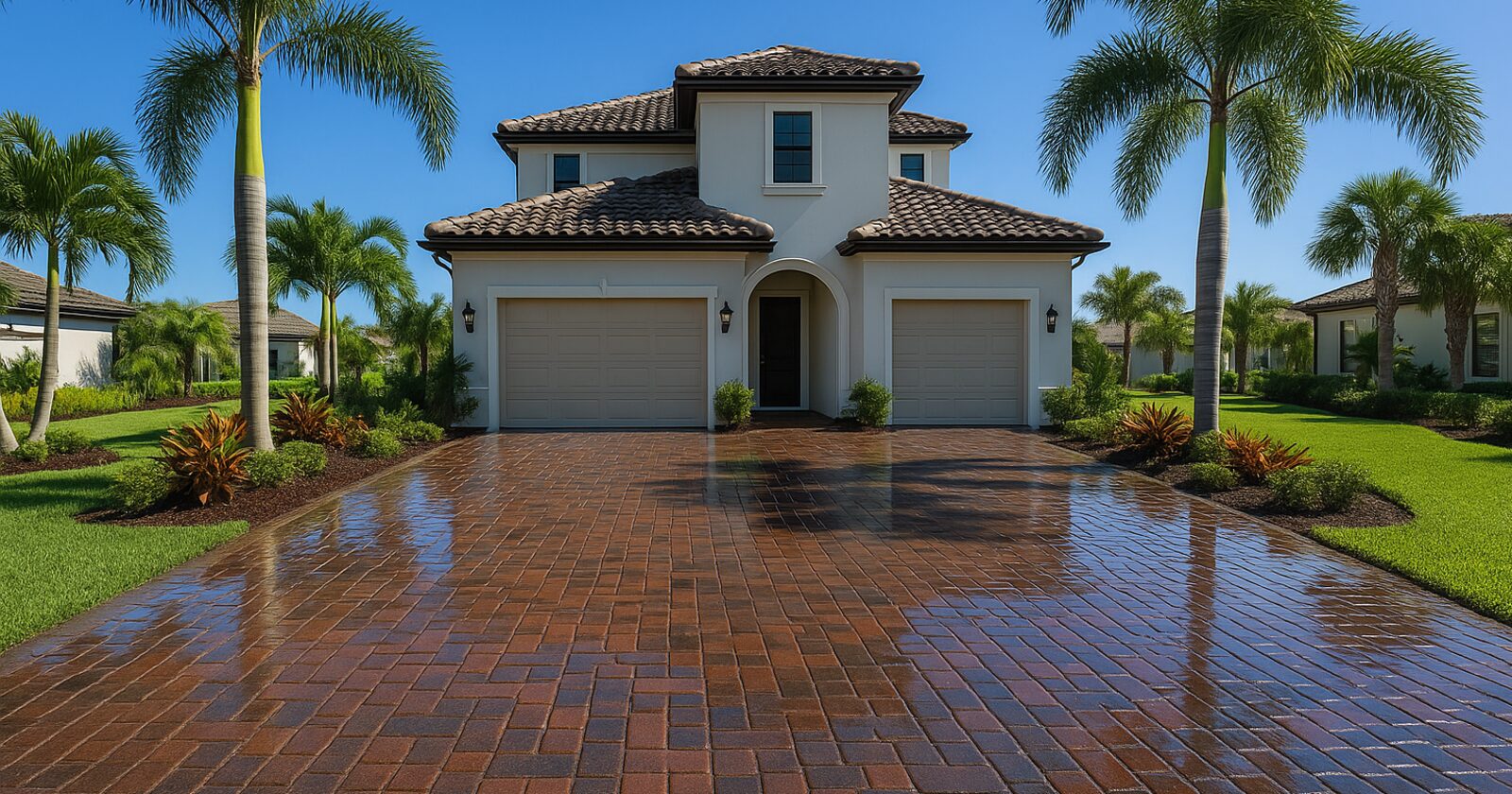
Lakewood Ranch is one of the country's top-selling master-planned communities, full of newer homes with large paver driveways and paver or travertine pool decks that are just now reaching their first reseal.
We provide professional paver sealing and restoration services throughout Lakewood Ranch, Florida, covering driveways, pool decks, patios, and walkways across the community's many villages and residential neighborhoods. Our work includes deep cleaning, polymeric sand replacement, joint re-sanding, efflorescence treatment, and multiple grades of sealant application - everything a Lakewood Ranch homeowner needs to protect and revive their outdoor paver surfaces.
Lakewood Ranch and Why Its Properties Demand Serious Paver Care
Lakewood Ranch is one of the largest master-planned communities in the United States, spread across both Manatee and Sarasota counties. It is not a single neighborhood but a collection of distinct villages - each built out in phases across roughly two decades - with tens of thousands of homes ranging from attached villas to large custom estates. The community was developed with a strong architectural consistency, and that consistency extends to the hardscape: concrete pavers are essentially the standard surface material for driveways, pool decks, lanais, and front entry walkways throughout the Ranch. This is not a community where paver care is an occasional specialty job. It is a routine and necessary part of homeownership here.
The community attracts a wide range of residents - retirees relocating from the Northeast and Midwest, young professional families drawn by the schools, and seasonal residents who leave homes vacant for months at a time. That last group creates a specific maintenance challenge: a home that sits unoccupied through a Florida summer accumulates mold, algae, and organic staining at a rate that surprises owners when they return in the fall. Regular sealing creates a surface barrier that slows that process considerably and makes post-season cleaning far less intensive.
The Florida Climate and What It Does to Lakewood Ranch Pavers
Lakewood Ranch sits inland from the Gulf coast, far enough that direct salt spray is not a daily factor the way it is in waterfront communities. However, the humidity levels here are among the highest in the country for much of the year, and that moisture drives biological growth - algae, mold, and mildew - that colonizes unsealed or under-sealed pavers rapidly. Afternoon thunderstorms between June and September are intense and frequent, saturating the ground, flooding joints, and washing polymeric sand out of place over successive seasons. The subtropical sun is equally aggressive: UV exposure bleaches pigment out of colored pavers and degrades organic joint sand that was not designed to survive years of direct Florida sun without reinforcement.
The soil beneath Lakewood Ranch is predominantly sandy, which actually drains well and reduces freeze-thaw stress - a non-issue in Florida anyway - but sand migration is a real concern. As water moves through the substrate and joints erode, pavers begin to shift, rock, and develop uneven surfaces. On driveways, that unevenness telegraphs into vehicle wear and trip hazards. On pool decks, it creates pooling water and safety concerns. Sealing the joint sand locks the base in place and significantly extends the stable life of the installation.
The Jobs Lakewood Ranch Homeowners Typically Call About
The most common call we get from Lakewood Ranch residents involves a driveway that has gone gray and slick with algae growth, often in a home that is a decade to fifteen years old. Many of the earlier villages - those built in the late 1990s and through the 2000s - are now at an age where the original sealer, if any was applied, has completely failed, and the pavers have absorbed years of organic material and vehicle fluids. A proper restoration on these surfaces involves pressure washing at the right PSI to remove contamination without damaging the paver face, followed by a full inspection of the joint sand, re-sanding where needed, and application of a penetrating or film-forming sealer depending on the surface type and the homeowner's finish preference.
Pool deck restoration is the second most common job, and it carries its own complexity. Lakewood Ranch homes - particularly in the mid-range and upper price points - almost universally have screened lanai enclosures with paver or travertine deck surfaces surrounding the pool. These surfaces stay damp, receive constant splash-out, and sit under screen enclosures that trap humidity while blocking the drying effect of wind. The result is stubborn biological staining and, in the case of travertine, mineral deposits that require specific acid-based treatments before sealing can be effective. We also regularly address efflorescence - the white crystalline mineral bloom that migrates out of concrete pavers - which is especially common in pool deck environments where water is always present.
Walkways and front entry courts are a third category. Many Lakewood Ranch homes have elaborate entry hardscapes with borders, patterns, and inset designs that were a selling point when the home was built. When these surfaces go dark with staining or develop joint sand loss, they significantly diminish curb appeal in a community where HOA standards and resale value are genuine daily concerns for owners.
How the Work Gets Done in Lakewood Ranch
Access in Lakewood Ranch is generally straightforward. Most homes are on residential streets with adequate staging space for equipment, and the community's road network - designed from the ground up for suburban vehicle traffic - does not create the tight-access challenges you encounter in older, denser neighborhoods. That said, gated villages require a confirmed entry process, and we coordinate that in advance so there is no delay on the job day. Some HOAs in Lakewood Ranch require advance notice or written approval for exterior work that affects the appearance of the home - particularly when a color-enhancing sealer might change the look of the pavers - and we advise homeowners to confirm their specific HOA requirements before scheduling. We are familiar with the general process across the community's various management structures.
For a standard driveway or pool deck job, we bring a professional-grade hot-water surface cleaner, appropriate detergents for the specific contamination type, polymeric sand for joint replenishment, and the appropriate sealer for the surface and conditions. We do not use consumer-grade equipment or big-box sealers. The chemistry matters significantly on Florida pavers, and using the wrong product - particularly a high-solids film-forming sealer on a surface that retains moisture - can trap water and cause peeling within a single wet season. You can review our services for a full breakdown of the products and methods we use on different surface types.
What the Process Looks Like Start to Finish
The process begins with a site visit and a conversation about the current condition of the pavers, what the homeowner wants to achieve, and what the realistic outcome looks like given the age and type of the installation. We discuss finish options - matte, satin, or wet-look - and whether a color-enhancing sealer is appropriate. This consultation is a genuine assessment, not a sales presentation. You can schedule a free consultation to get started.
On the job day, the sequence is: surface pre-treatment with a biodegradable cleaner, pressure washing at controlled PSI, joint sand inspection and replacement where needed, a drying period - typically 24 to 48 hours in Lakewood Ranch's climate depending on the season and current humidity - and then sealer application in two coats, with the second coat applied perpendicular to the first for even coverage. The total time on site for an average driveway and walkway is typically one to two days, with full cure time before vehicle traffic running another 24 to 72 hours.
Common Mistakes and What to Watch For
The most common mistake homeowners in Lakewood Ranch make is sealing over pavers that have not been adequately cleaned. A sealer applied on top of embedded algae or efflorescence locks the contamination in and often causes rapid peeling or bubbling. The surface must be genuinely clean - not just surface-rinsed - before any chemistry goes on top of it. A second common mistake is applying sealer during the rainy season without accounting for the drying window. In a Lakewood Ranch summer, afternoon rain arrives with little warning, and if sealer has not fully cured before water hits it, the result is white hazing that requires stripping and reapplication. Timing and weather awareness are not minor details; they determine whether a job lasts three to five years or fails within one season. Our common questions page addresses several of these topics in more detail.
Another issue specific to this community involves polymeric sand selection. Not all polymeric sands perform the same way in Florida heat and humidity. Some formulations that work well in northern climates can activate prematurely or fail to fully harden in subtropical conditions. We source products specifically rated for hot, humid climates, which is not a universal practice among general pressure washing contractors who occasionally offer sealing as an add-on service.
Why Lakewood Ranch Homeowners Choose a Professional
In a community where HOA-enforced curb appeal standards, active resale markets, and significant property investment are realities of daily life, the cost of a failed DIY sealing job is not just cosmetic. Peeling sealer on a driveway, or pavers that develop a hazy film from improper product use, can attract HOA notices and complicate a home sale. The pavers in Lakewood Ranch are a genuine asset - replacing a full driveway or pool deck installation is a substantial expense - and protecting that asset with a properly executed sealing and maintenance program is straightforwardly the more economical long-term choice.
Villages and Surrounding Areas We Also Serve
Lakewood Ranch's various villages - from the earliest-built sections near the original town center to the newer phases expanding toward the eastern edge of the community - all share broadly similar paver types and conditions, though the newer builds tend to have fresher joint sand and may need only cleaning and a first-time seal rather than full restoration. We also serve the adjacent communities throughout Manatee and Sarasota counties. For a full picture of where we work, see the areas we serve index. Whether your property is in an established Lakewood Ranch village or one of the newer phases still coming out of the builder warranty period, the maintenance needs are real and the value of professional sealing is consistent across the community.
What we do here
Our paver services in Lakewood Ranch
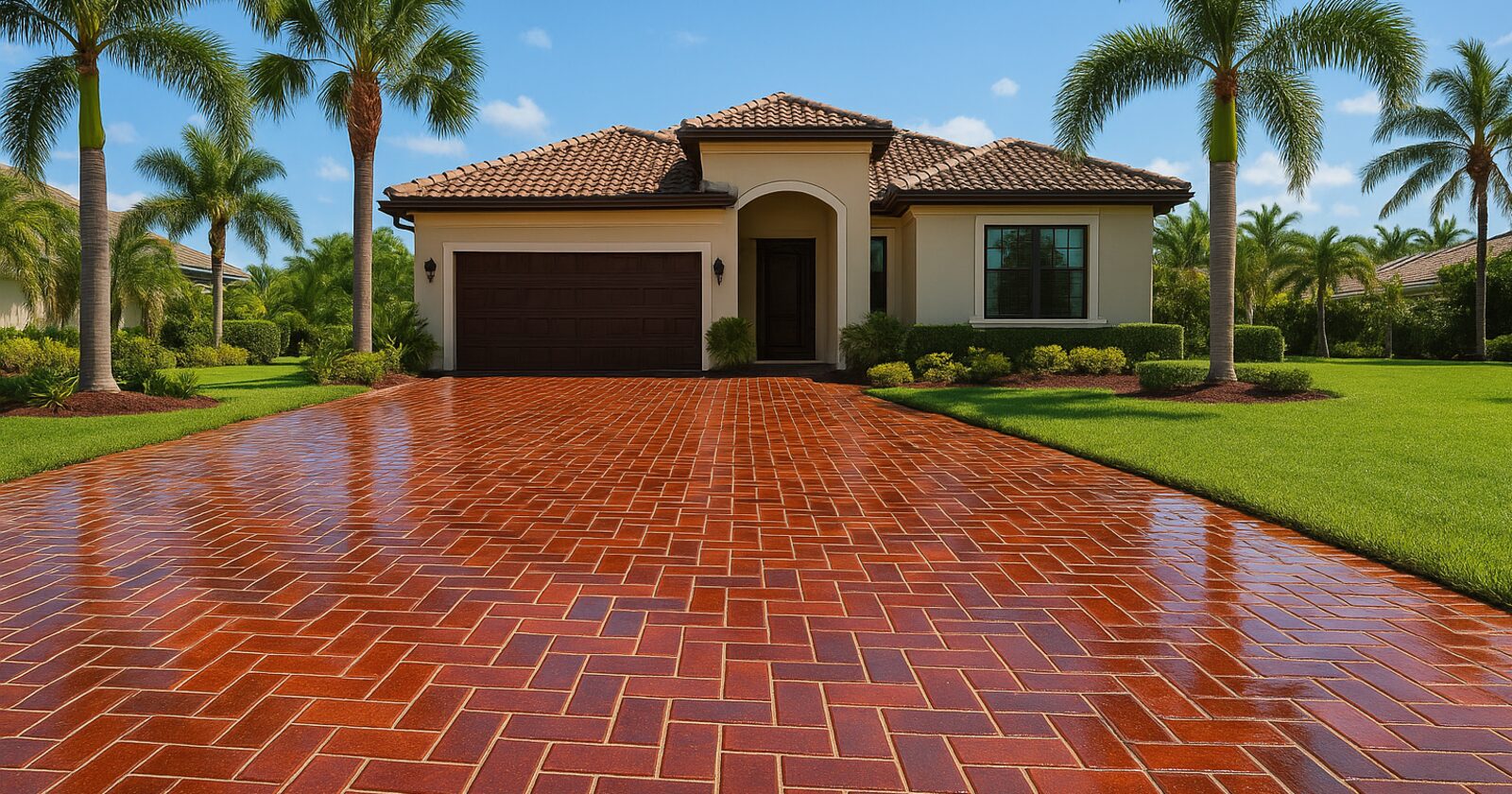
Paver Driveway Sealing
Clean, re-sand, and seal your paver driveway so the color comes back, the joints lock tight, and weeds and oil stains stop taking hold.
Learn more →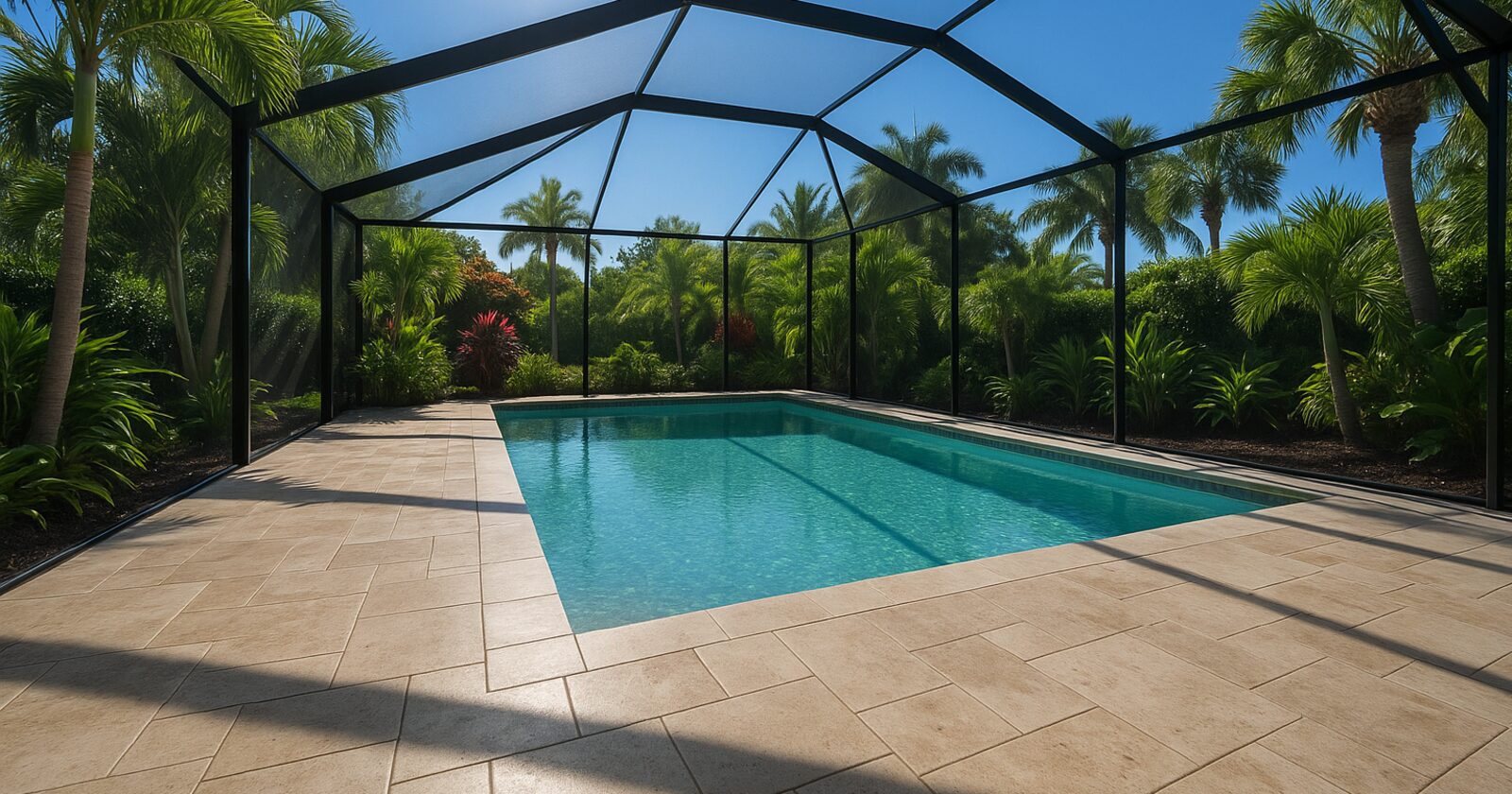
Pool Deck & Lanai Paver Sealing
Seal the pavers around your pool and lanai to stop algae, cut slip risk, and keep the deck cool and clean under bare feet.
Learn more →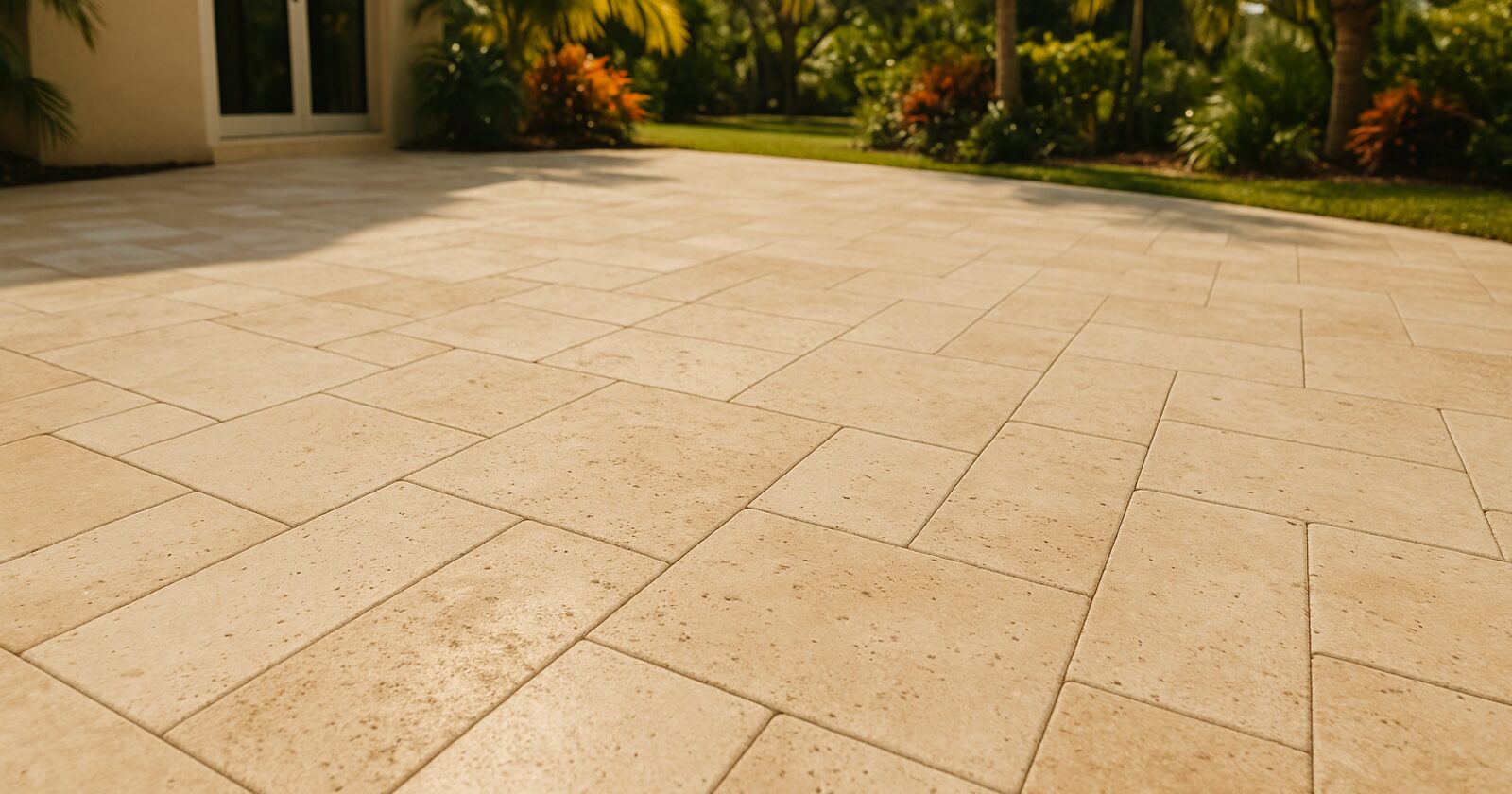
Travertine Cleaning & Sealing
Specialized cleaning and sealing for travertine pool decks and patios that protects the stone without making it slick.
Learn more →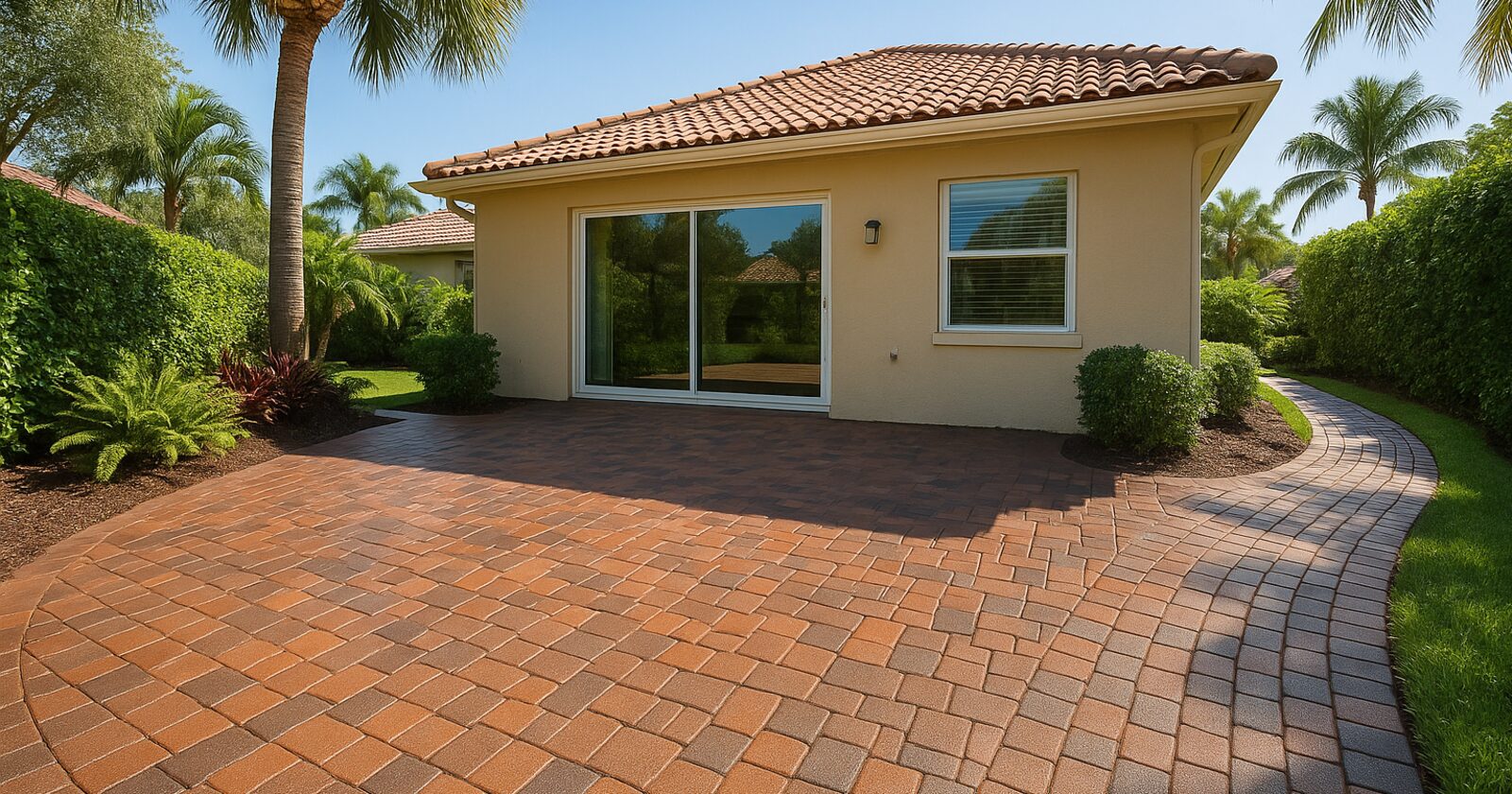
Paver Restoration & Re-Sanding
Bring a tired, weedy, or sunken paver surface back to life with re-sanding, minor releveling, and a fresh seal.
Learn more →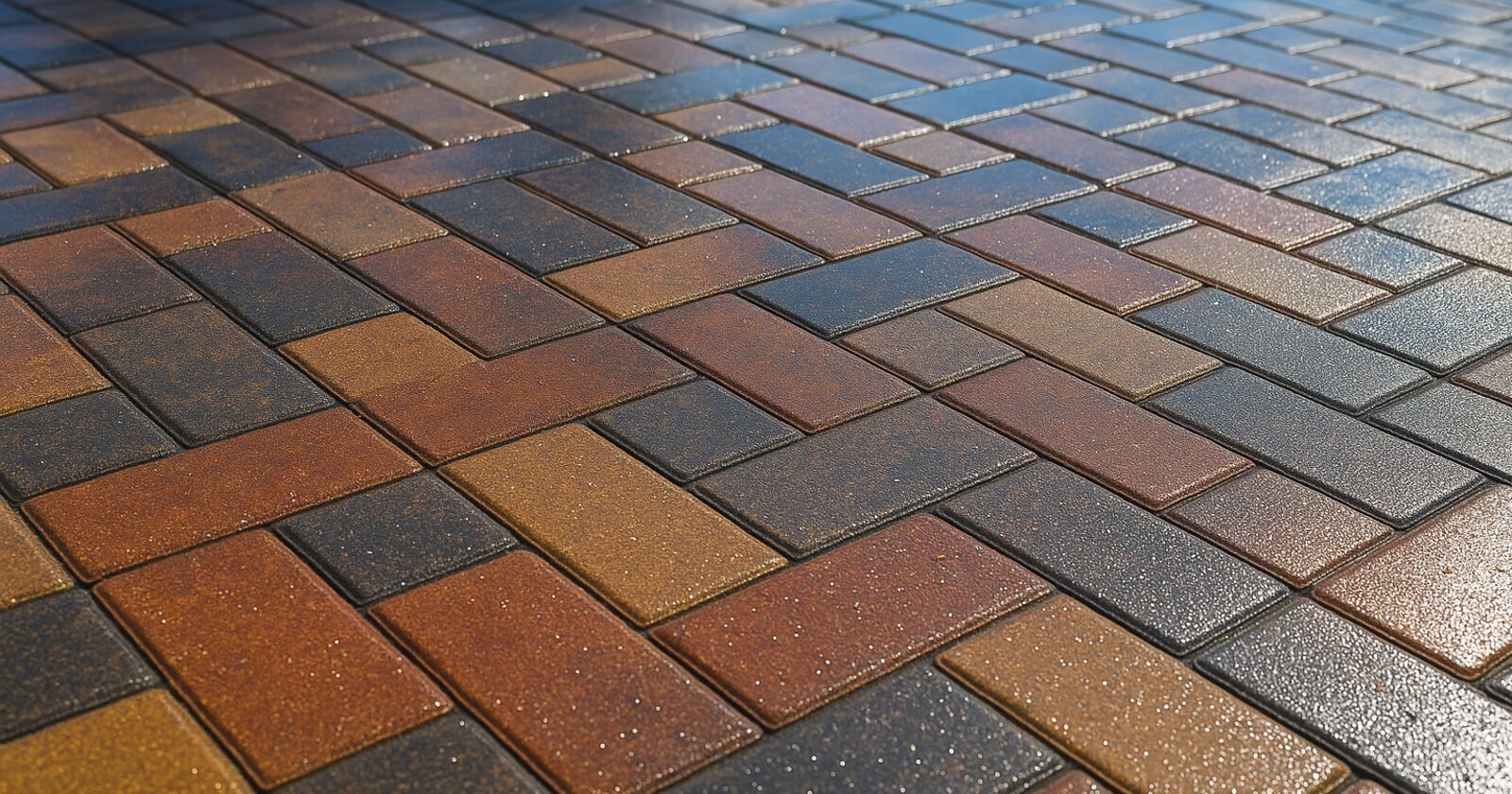
Paver Cleaning & Pressure Washing
Professional cleaning that safely strips mold, algae, rust, and grime from pavers without blasting the joint sand out.
Learn more →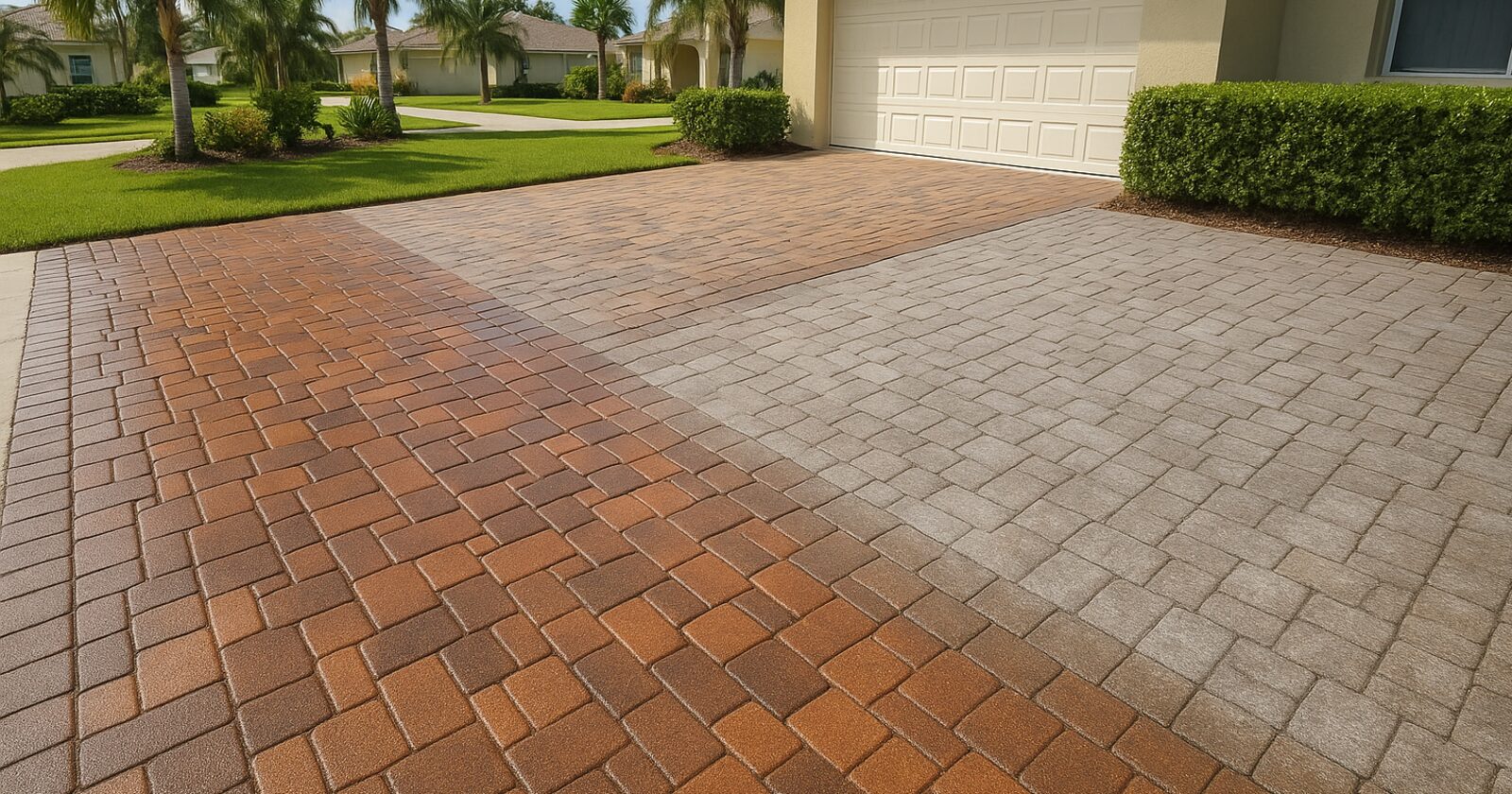
Sealer Stripping & Re-Seal
Remove old, failed, cloudy, or peeling sealer and start fresh with a clean, correctly applied coat.
Learn more →Answers
Paver sealing questions in Lakewood Ranch
How often should I have my Lakewood Ranch driveway pavers sealed?
My pool deck pavers have white staining that keeps coming back. What causes that in Florida?
Will my Lakewood Ranch HOA need to approve the paver sealing work before it's done?
The joint sand between my pavers keeps washing out after heavy rain. Can sealing fix that?
My Lakewood Ranch home sits empty most of the summer. Is that a problem for paver maintenance?
How do I know if my Lakewood Ranch pavers need restoration or just a fresh seal?
Get started
Request a free quote
Tell us what you need. No pressure, and a real person gets right back to you.