
Service area
Paver Sealing & Restoration in Parrish, FL
No pressure, ever
Paver sealing in Parrish? Get a free quote.
A real local person looks at your pavers and gives you a firm written price. No obligation.
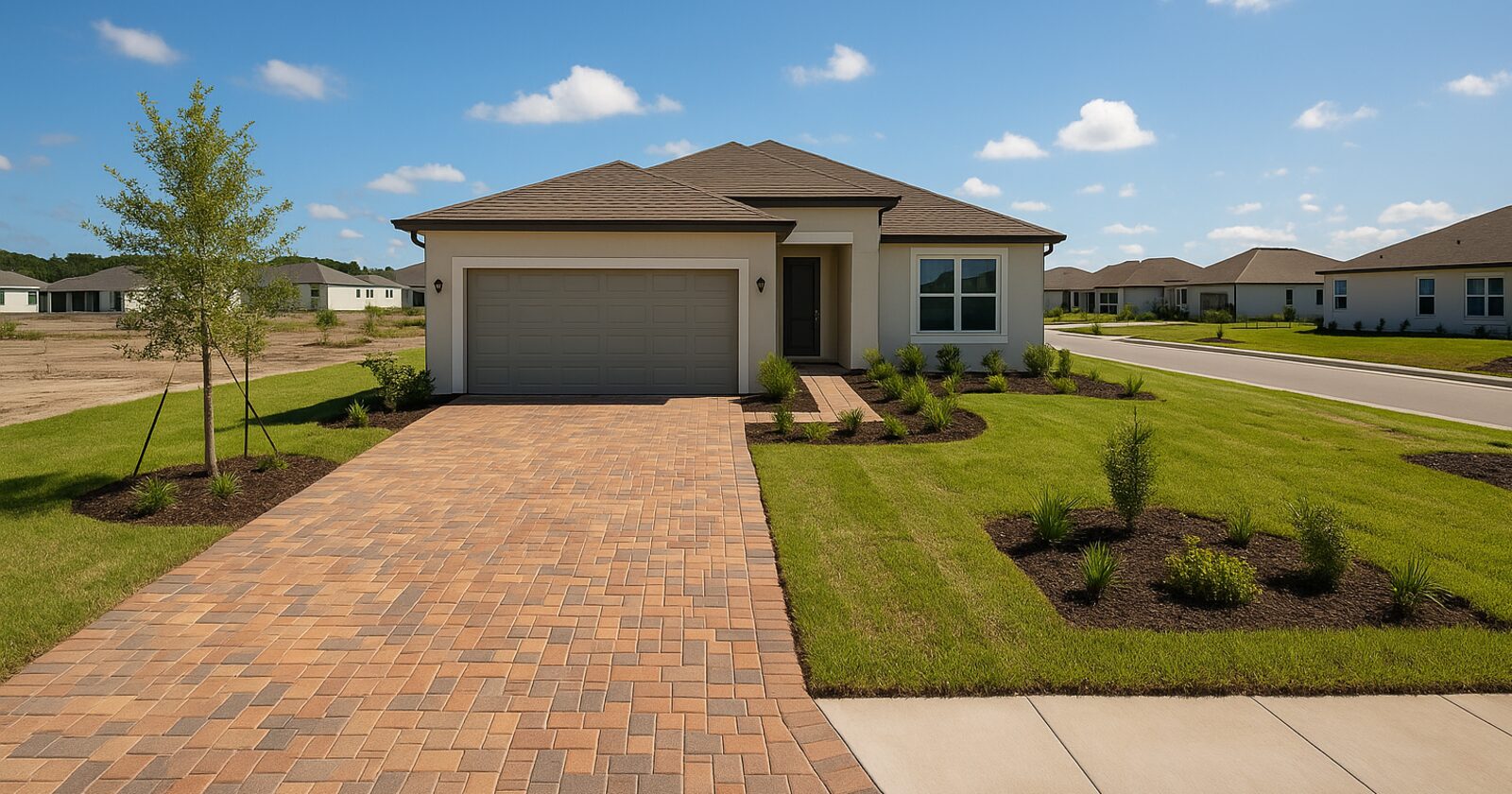
Parrish is one of Manatee County's fastest-growing areas, with sprawling new subdivisions of paver-driveway homes all entering their first seal-and-maintain cycle at once.
We provide professional paver sealing and restoration throughout Parrish, Florida, covering driveways, pool decks, lanais, walkways, and patios for residential and new-construction properties across this fast-growing Manatee County community. Our work includes pressure washing, joint sand restoration, efflorescence removal, color enhancement, and protective sealing suited to Parrish's specific climate and soil conditions.
What Parrish Is and Why That Shapes This Work
Parrish sits in the northeastern corner of Manatee County, inland from the Gulf Coast but still well within the region where heat, humidity, and afternoon thunderstorms define daily life for most of the year. It has grown remarkably fast over the past decade and a half, with large planned communities spreading across former agricultural land. Many of the homes here are relatively new - built within the last five to fifteen years - but that youth does not spare their paver surfaces from Florida's aggressive weathering cycle. In fact, some of the most common calls we receive come from homeowners in newer subdivisions who assumed brand-new pavers would stay pristine on their own and are now dealing with fading, organic staining, and eroded joint sand far sooner than expected.
The property character in Parrish tends toward spacious single-family homes on lots that were designed with outdoor living in mind. Large lanais, screened enclosures with paver floors, wide driveways that accommodate multiple vehicles, and decorative front walkways are all common features of the planned communities that define the area. This means the average Parrish property has substantially more paver surface area than older, smaller lots closer to the coast. More square footage means more exposure, more maintenance, and more to protect.
Local Conditions That Drive Demand
The climate here is relentless on hardscape. Parrish is not coastal in the way that Bradenton Beach or Anna Maria Island is, so direct salt air is less of a factor - but that does not mean conditions are gentle. Summer humidity routinely sits above ninety percent for weeks at a stretch, and the area receives intense UV radiation that breaks down paver color and dries out unprotected surfaces. The wet season brings concentrated heavy rainfall that drives organic material - algae, mold, mildew, and lichen - deep into porous paver surfaces and keeps polymeric joint sand perpetually damp, accelerating its breakdown.
Because Parrish's growth has pushed development into areas that were previously floodplain, drainage management is an important local issue. Many paver systems here are installed over compacted subgrade that must handle significant water movement during storm season. When joint sand washes out - as it frequently does after hard summer rains - the structural integrity of the paver surface is compromised. Pavers begin to shift, settle unevenly, and in some cases create trip hazards that homeowners do not notice until the problem is well advanced.
The inland soil in this part of Manatee County also contributes to a specific problem: efflorescence. The calcium carbonate that migrates to the surface of concrete-based pavers is drawn up through moisture movement in the soil, and it appears as white or gray streaking and haze that many homeowners initially mistake for fading. In Parrish, where soil moisture levels stay high through much of the year, efflorescence is one of the most common complaints we hear before a job begins.
What Parrish Customers Typically Call About
The calls we receive from Parrish homeowners follow a fairly consistent pattern, and most of them trace back to two things: neglected maintenance on relatively young paver systems, and storm damage. Driveways in the planned communities here are often wide, decorative, and heavily used. After three to five years without sealing, they typically show significant color fade, visible organic staining from lawn irrigation overspray and leaf decomposition, and joint sand that has eroded down well below the chamfered edge of the pavers.
Pool decks and screened lanais are another major source of calls. These surfaces in Parrish tend to be large - often several hundred square feet - and they are shaded enough by pool enclosures to stay damp longer than open driveways. That moisture retention encourages algae and mold growth that turns light-colored travertine or natural concrete pavers to a greenish-gray. Beyond being unsightly, these surfaces become genuinely slippery and unsafe. Part of our work on these jobs is selecting and applying the correct sealer with an appropriate slip-resistance additive, which matters more on a pool deck than almost anywhere else.
Customers also call after tropical storms and the heavy squall lines that move through Parrish during the active parts of hurricane season. These events can displace pavers, undermine the sand-set base, and strip out joint material across large surface areas at once. Post-storm restoration work - re-leveling, re-sanding, cleaning, and re-sealing - is a legitimate category of its own in this area.
How the Work Is Done Well Here
Good paver work in Parrish starts with understanding that the goal is not just cosmetic. The subgrade conditions, drainage patterns, and the specific paver material all have to factor into every decision, from what cleaning method to use to which sealer chemistry is appropriate. In this community, we regularly work with concrete interlocking pavers, tumbled travertine, and large-format porcelain - each of which requires a different approach to both cleaning and sealing.
Access and logistics in Parrish's planned communities are generally straightforward. Neighborhoods are designed with residential service access in mind, and most driveways and outdoor areas are reachable without special equipment or permits for standard sealing and cleaning work. Where paver resetting or base repair is involved, the scope of the project is assessed clearly before work begins so that homeowners are not surprised by what a job requires. We coordinate carefully with homeowners on timing relative to the rainy season, because pavers must be fully dry before sealer is applied, and scheduling around Parrish's afternoon storm pattern matters more here than in drier parts of Florida. Learn more about the full range of our work on the our services page.
What the Process Looks Like Start to Finish
A typical Parrish job begins with a free consultation where we assess the condition of the paver surface, identify the material type, evaluate joint sand integrity, check for settled or displaced pavers, and look for efflorescence or organic staining. This assessment determines the scope of work and the right product and method for the specific conditions present.
Cleaning comes first and is always thorough. We use professional-grade equipment and appropriate pressure levels for the specific material - travertine, for example, is softer than concrete and requires lower pressure and specialized cleaners to avoid surface damage. Any efflorescence treatment is done as part of the cleaning phase, as is the removal of weed growth from joints. After cleaning, joint sand is evaluated and, where needed, replenished with polymeric sand that is rated for Florida's climate conditions. Displaced or settled pavers are reset before any sealer goes down.
Once the surface is clean, level, and dry, sealer is applied in controlled, even coats. The sealer type - whether a water-based matte finish, a solvent-based wet look, or a low-sheen penetrating sealer - is selected based on the paver material, the homeowner's preference, and the specific exposure conditions of that surface. After application, curing time is clearly communicated so the surface is not driven on or walked across prematurely. You are welcome to review common questions about timing, products, and what to expect throughout the process.
Mistakes to Watch For in Parrish
The most common mistake in this area is using a consumer-grade box-store sealer without proper surface preparation. Many Parrish homeowners try this on their own and find that the sealer peels, whitens, or traps moisture beneath the surface within a season. Florida's UV intensity degrades low-quality sealers rapidly, and the result is often more work to fix than if nothing had been done at all.
Over-application of sealer - whether by a homeowner or an undertrained contractor - is another issue specific to hot, humid conditions. Too thick a coat does not allow the surface to breathe, creating a milky, clouded appearance that is difficult to correct without stripping the sealer entirely. Proper application technique and product knowledge are not optional in this climate; they are the difference between a result that lasts three to five years and one that fails in a single summer. For homeowners evaluating contractors, the areas we serve page can help confirm service coverage and give context about our regional experience.
Why Parrish Homeowners Choose a Professional
In an established coastal town, pavers might be seen as a minor exterior feature. In Parrish's planned communities, they are central to the curb appeal and outdoor functionality that buyers paid for when they chose the neighborhood. HOA standards are often a factor here, and homeowners are frequently motivated by community appearance expectations as well as their own pride in the property. A well-maintained paver driveway and pool deck in Parrish is not a luxury detail - it is part of what the neighborhood promises and what the home is worth.
Professional sealing also extends the life of the paver installation itself, which represents a significant investment in any of these newer Parrish homes. When joint sand is maintained, when staining is removed correctly, and when the right sealer is applied properly, a paver system that might otherwise require costly replacement in ten years can last twenty-five or thirty with only periodic maintenance. That kind of return is concrete and measurable, and it is why so many Parrish homeowners who start with one driveway job come back for their lanai, their walkway, and ultimately their entire property.
Surrounding Areas and Sub-Neighborhoods
Parrish encompasses a broad area that includes several distinct planned communities and transition zones toward Ellenton, Palmetto, and the older rural sections of northern Manatee County. Properties toward the county's western edges have more established landscaping and somewhat different drainage conditions than those farther east, where newer phases of development are still being completed. We serve the full extent of the Parrish zip code area and regularly work in adjacent communities throughout Manatee County, all of which are reflected in the areas we serve index.
What we do here
Our paver services in Parrish
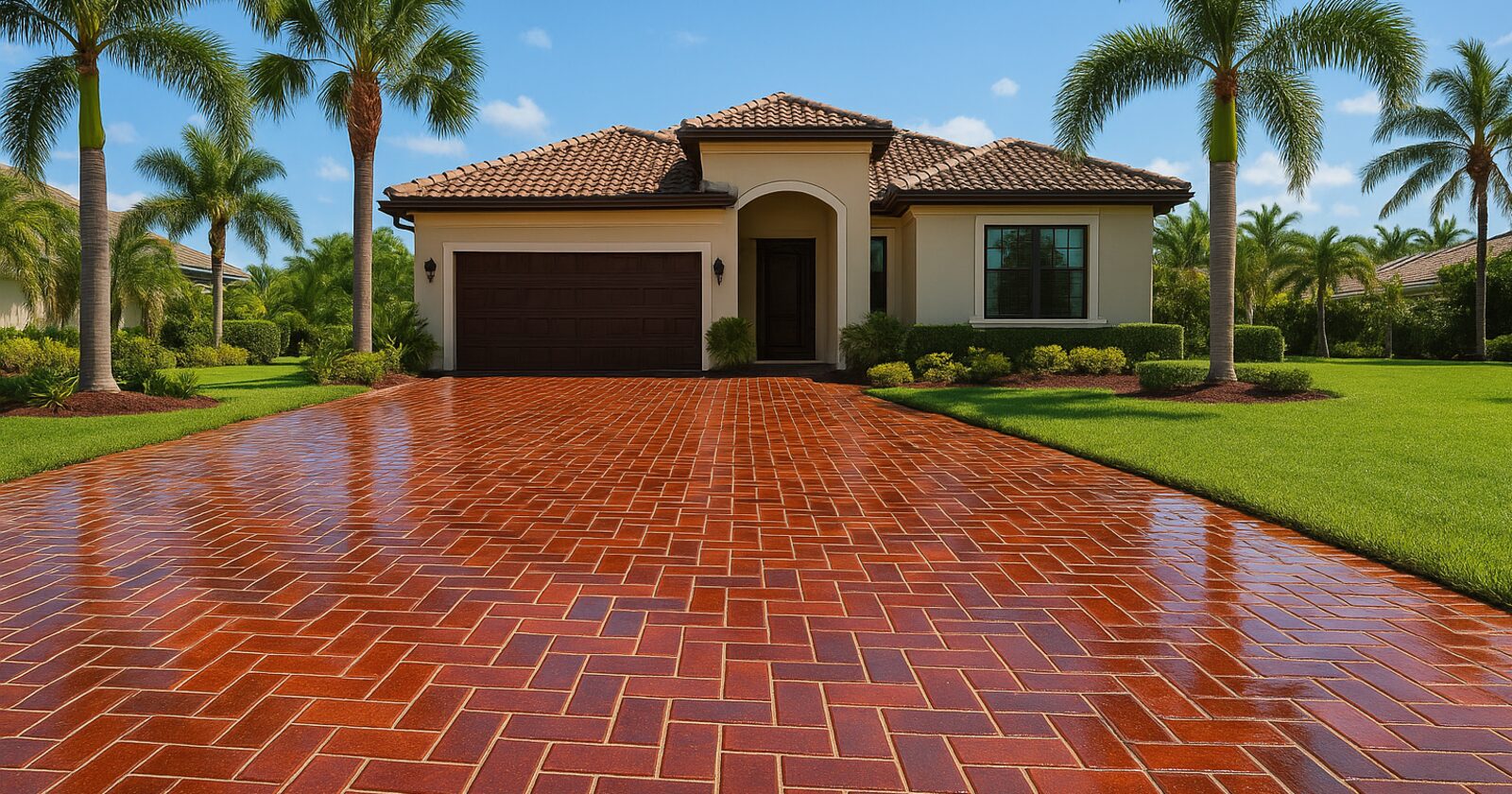
Paver Driveway Sealing
Clean, re-sand, and seal your paver driveway so the color comes back, the joints lock tight, and weeds and oil stains stop taking hold.
Learn more →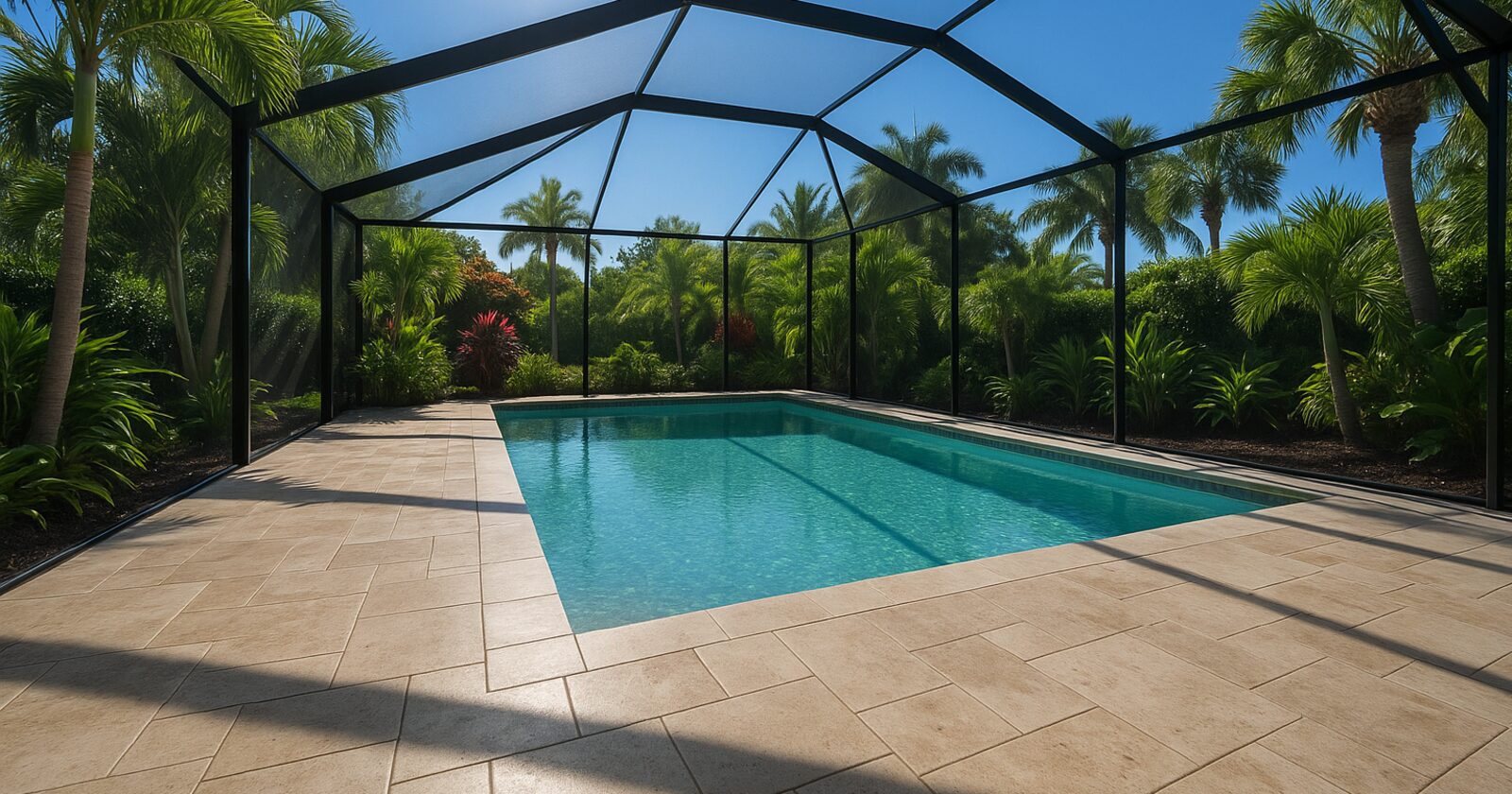
Pool Deck & Lanai Paver Sealing
Seal the pavers around your pool and lanai to stop algae, cut slip risk, and keep the deck cool and clean under bare feet.
Learn more →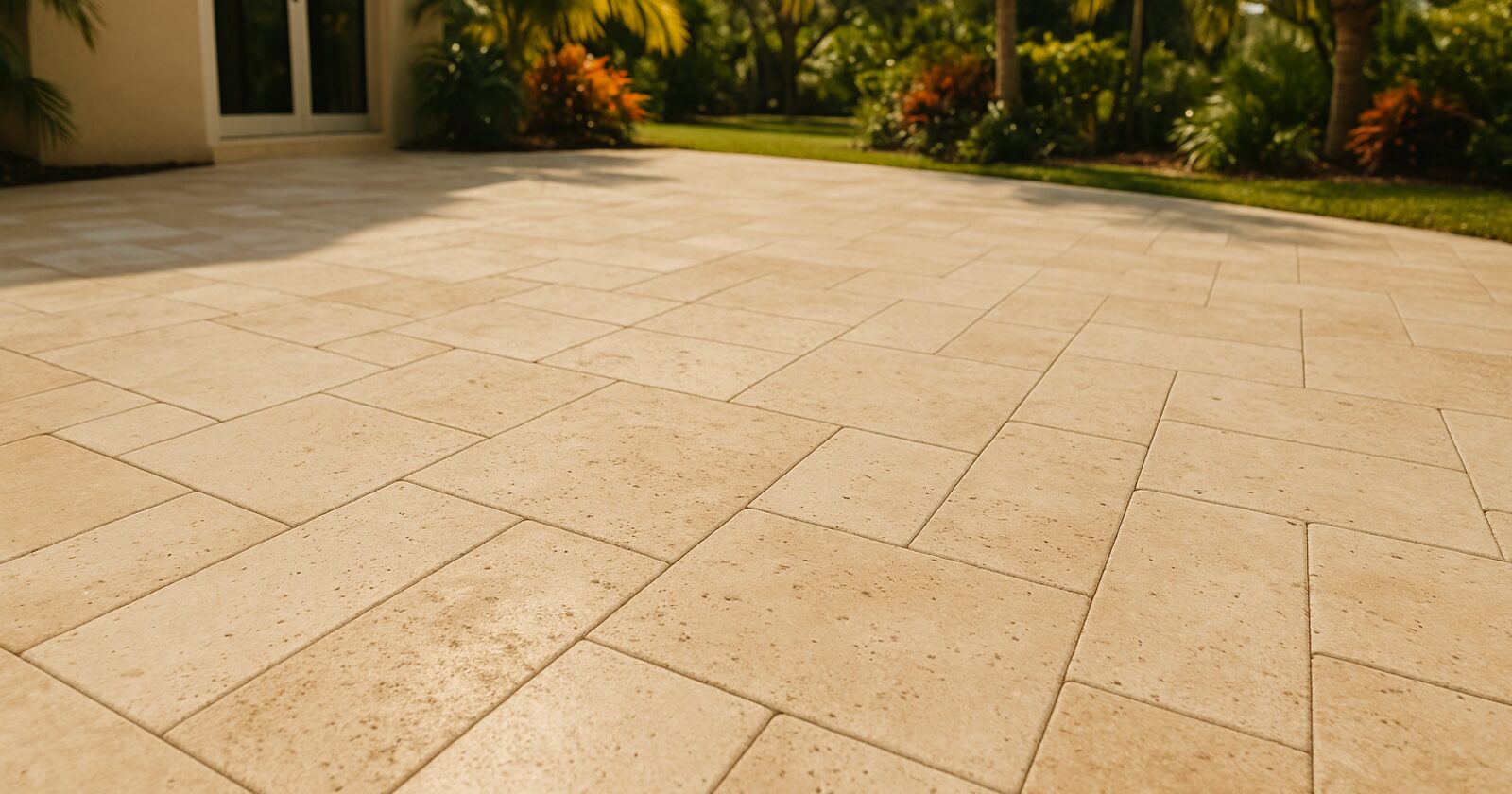
Travertine Cleaning & Sealing
Specialized cleaning and sealing for travertine pool decks and patios that protects the stone without making it slick.
Learn more →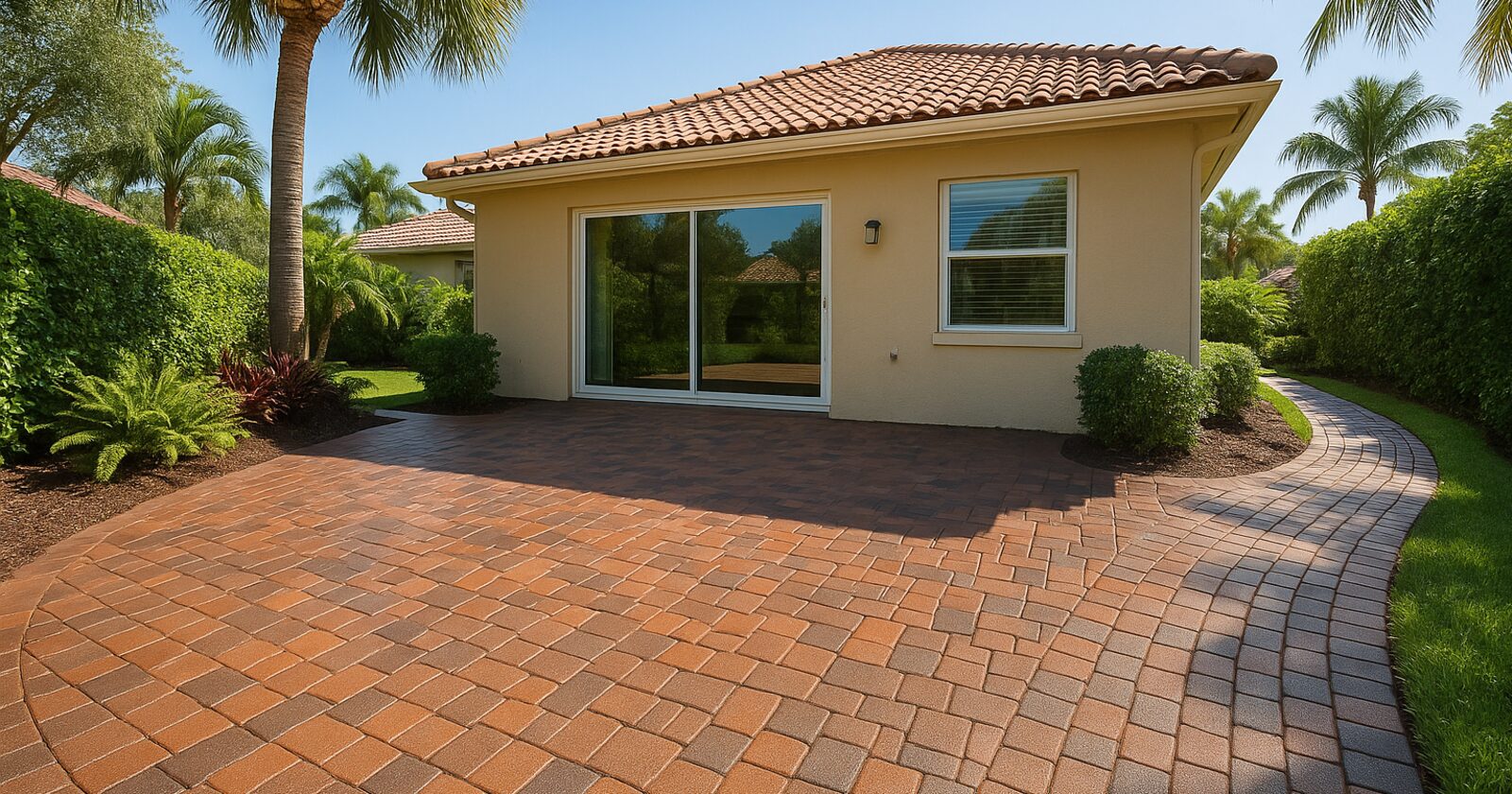
Paver Restoration & Re-Sanding
Bring a tired, weedy, or sunken paver surface back to life with re-sanding, minor releveling, and a fresh seal.
Learn more →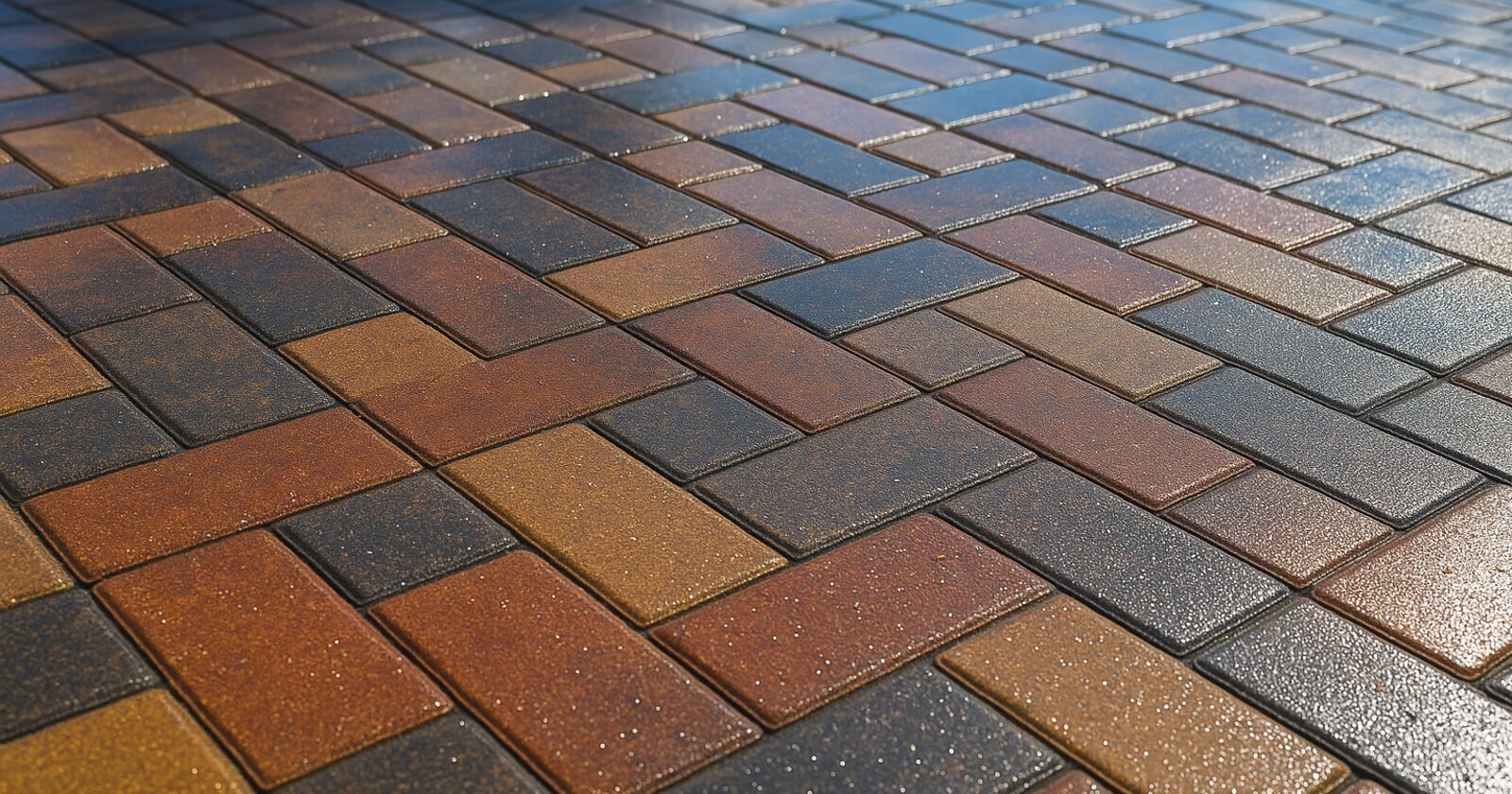
Paver Cleaning & Pressure Washing
Professional cleaning that safely strips mold, algae, rust, and grime from pavers without blasting the joint sand out.
Learn more →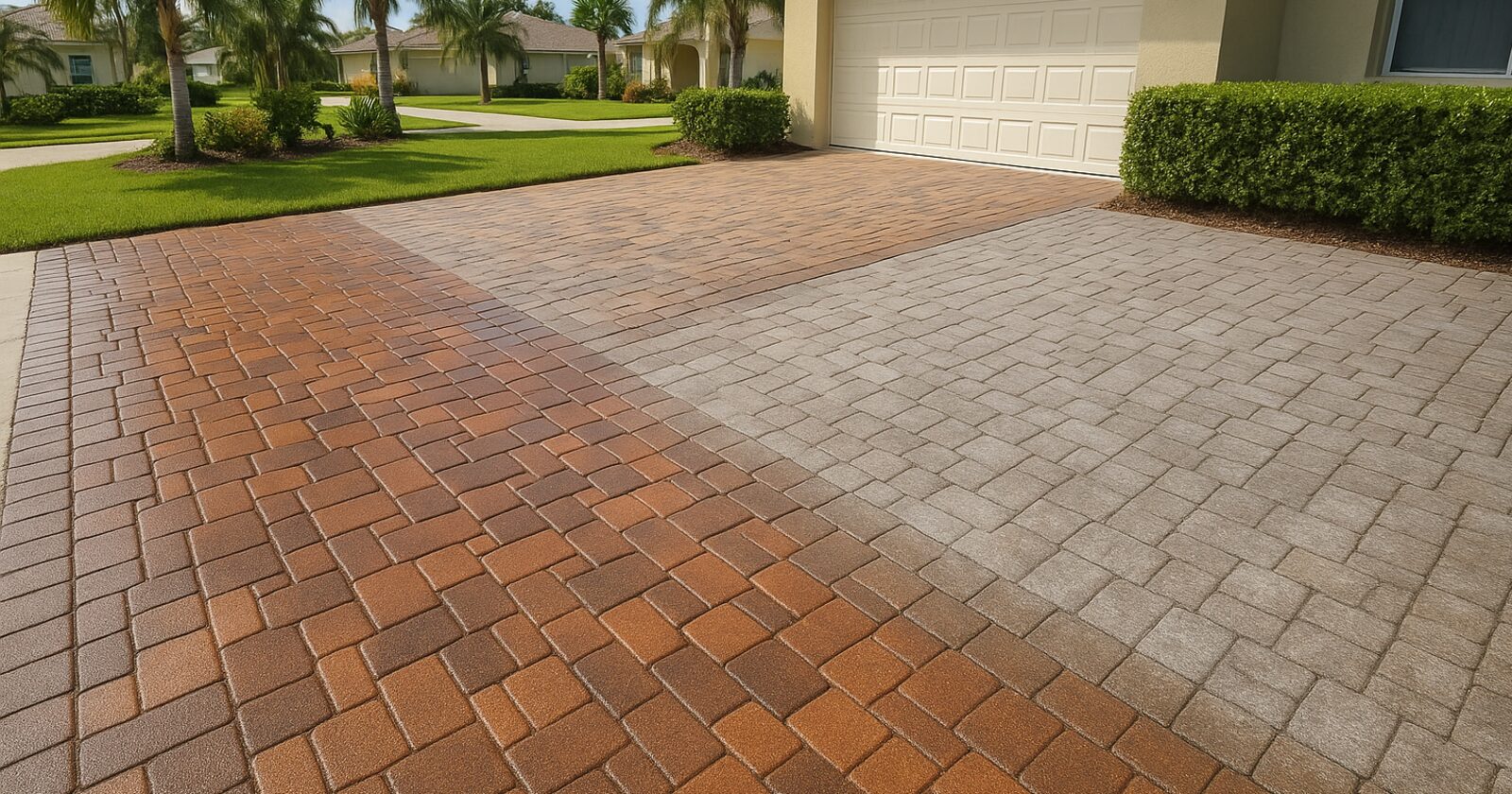
Sealer Stripping & Re-Seal
Remove old, failed, cloudy, or peeling sealer and start fresh with a clean, correctly applied coat.
Learn more →Answers
Paver sealing questions in Parrish
My pavers are only five years old. Do they really need sealing already in Parrish?
My pool deck pavers in my screened lanai are covered in green algae and feel slippery. Can that be fixed?
There is a white haze on my driveway pavers. What is it and can it be removed?
A storm shifted several of my pavers and washed out the joint sand. Do I need the whole driveway replaced?
How long does a sealer actually last on pavers here, given Parrish's heat and rain?
My HOA requires pavers to be maintained. Can you provide documentation of the work done for HOA records?
Get started
Request a free quote
Tell us what you need. No pressure, and a real person gets right back to you.