
Will sealing pool deck pavers void your pool warranty?
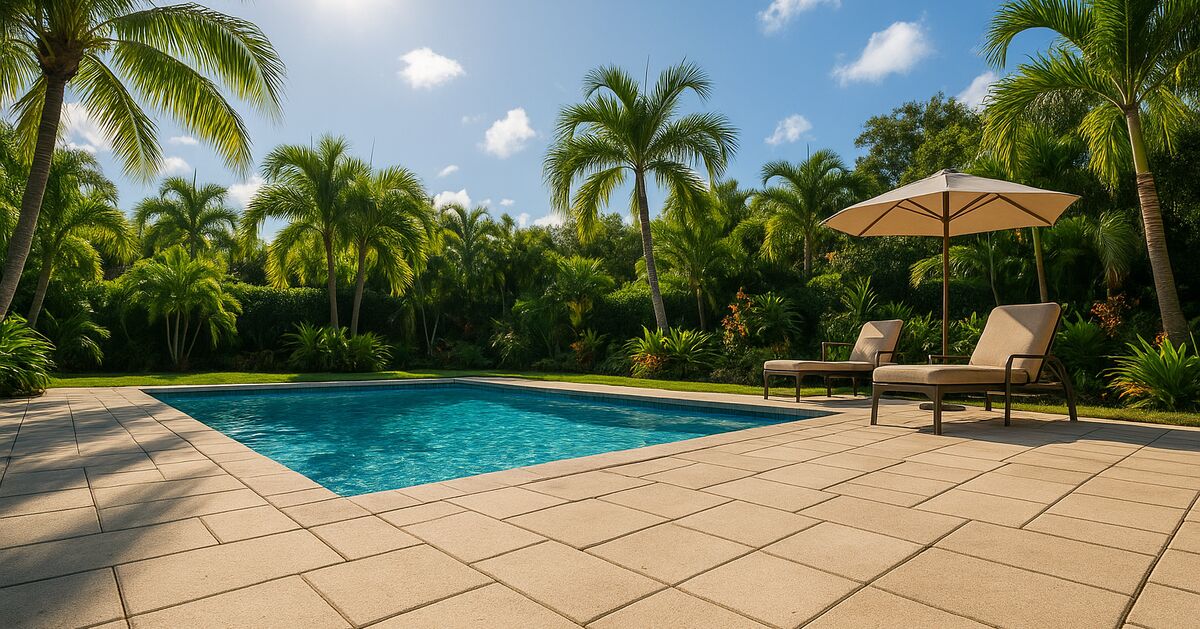
Sealing the pavers around your pool is one of the smartest things you can do for your outdoor space in Southwest Florida, but plenty of homeowners pause right before pulling the trigger because of a nagging question: "Will this void my pool warranty?"
It's a fair thing to wonder. Pool equipment and finish warranties can be surprisingly specific, and nobody wants to do something that accidentally lets a manufacturer off the hook. The short answer is that paver sealing almost never touches your pool warranty in any meaningful way, but there are a few real exceptions worth knowing about. Let's walk through the whole picture so you can move forward with confidence.
What Pool Warranties Actually Cover
Before worrying about voiding anything, it helps to understand what pool warranties typically protect. Residential pool warranties in Florida generally fall into a few categories:
- Shell or structural warranty - covers cracks or delamination of the gunite or fiberglass shell itself
- Finish warranty - covers the plaster, pebble, or tile finish on the interior surface of the pool
- Equipment warranty - covers pumps, filters, heaters, automation systems, and similar components
- Builder workmanship warranty - covers the overall installation, usually for one to three years
Notice what is not on that list: the surrounding deck surface. The paver deck around your pool is almost always a separate scope of work from the pool itself, and it typically carries its own warranty from the paver installer, if any warranty exists at all. Sealing those pavers is a maintenance activity on a completely separate product from the pool shell and its equipment.
So when a homeowner asks "will sealing void my pool warranty?", the first clarifying question is: which warranty are we actually talking about?
The One Scenario Where Sealing CAN Cause a Problem
Here is where we need to be specific, because there is one genuine risk area: pool deck coatings or overlay systems applied directly over concrete or over the coping and deck as a unified surface.
Some pool builders in the Sarasota and Bradenton area apply a spray-applied texture coating, a cool-deck product, or a concrete overlay directly to a poured concrete deck. These are not pavers. They are a coating bonded to the substrate. If your pool contract or warranty explicitly covers this coating and specifies which maintenance products are approved, applying an incompatible sealer could:
- Cause delamination or bubbling of the coating
- Discolor or streak the textured surface
- Give the builder or coating manufacturer grounds to deny a warranty claim on that coating
If you have a poured concrete deck with a spray coating, always check your paperwork before sealing, and make sure any sealer applied is designed for coated concrete rather than for raw pavers.
If you have genuine clay or concrete pavers set in sand or mortar around your pool, this concern largely disappears. Pavers are individual units, not a bonded coating. A paver sealer applied to them does not interact with the pool shell, the pool finish, or the pool equipment in any way.
What About Sealer Getting Into the Pool Water?
This is another question we hear often, especially from homeowners in Lakewood Ranch paver sealing and restoration communities where large pool decks sit right at the water's edge.
The concern makes sense intuitively: if it rains right after sealing, or if someone splashes a lot of water out of the pool, could sealer run into the pool and affect the water chemistry or the interior finish?
In practice, the risk is very low, for a few reasons:
- Professional sealing is done in dry conditions. A reputable contractor will not seal pavers in the hours before forecasted rain, and they will apply sealer carefully, keeping product away from the waterline.
- Paver sealers cure quickly. Most solvent-based and water-based sealers used on pool decks are touch-dry within 30 to 90 minutes and chemically cured enough within 24 hours that incidental water contact is not a meaningful concern.
- The pool perimeter drain and coping act as a buffer. In a properly built pool, the coping overhangs slightly and the deck pitches away from the water. A tiny amount of sealer residue that might migrate toward the pool would be heavily diluted before it could affect water chemistry.
That said, a professional crew will always mask or avoid the waterline tile and the interior pool finish during any deck work. If you are working with our paver sealing and restoration services, this kind of care is standard procedure.
Pool Coping: A Special Case
The coping is the capstone material that sits at the very edge of the pool, covering the bond beam and forming the transition between the pool shell and the deck. In many Florida homes, the coping is made from the same pavers as the surrounding deck, or from travertine, bullnose brick, or cut limestone.
Coping can and should be sealed as part of a pool deck sealing project. However, a few things are worth discussing with your contractor:
- Is the coping mortared or set in a membrane? If the coping is mortared directly over the bond beam and the mortar is cracking, sealing over damaged mortar can trap moisture and accelerate the problem. Address mortar repairs first.
- Does the sealer need to bridge the coping-to-shell joint? The answer is no. Sealer should not be applied so it bridges the expansion joint between the coping and the pool shell interior. That joint is meant to flex, and bridging it with a rigid sealer film can cause cracking.
- What finish is on the underside of the coping? If there is a waterline tile or plaster finish immediately below the coping, be careful that sealer does not drip onto those surfaces, as removal from plaster can be difficult.
None of these issues are reasons to avoid sealing. They are reasons to hire someone who knows what they are doing. Our frequently asked questions page covers a lot of the product and process questions homeowners have before scheduling work.
Checking Your Pool Builder's Fine Print
If you want to be completely certain before proceeding, here is how to check your own documentation in about ten minutes:
- Pull your pool construction contract and any warranty certificate. Look for language about "deck maintenance," "approved deck treatments," or "surface coatings."
- Search for the word "sealer" or "sealant." Most residential pool warranties say nothing about this at all, which is itself meaningful.
- Call your pool builder's warranty department. Ask specifically: "Does applying a paver sealer to my surrounding deck surface affect my pool shell or finish warranty?" Get the answer in writing (an email is fine).
In the vast majority of cases, a pool builder's warranty department will confirm that work done to the surrounding paver deck has no bearing on the pool shell or equipment warranty. The two systems are independent.
If your pool is relatively new and still under a builder workmanship warranty, it is also worth noting that sealing brand-new pavers requires waiting a period of time for efflorescence to work its way out of the material before sealing. Rushing that step can create its own problems unrelated to any warranty.
Why Southwest Florida Pool Decks Need Sealing More Than Most
If you live anywhere in our service area, from Wellen Park down to Venice and Nokomis, you already know that the Gulf Coast environment is hard on outdoor surfaces. Here is what your pavers are up against every single season:
- UV exposure. Southwest Florida averages around 250 sunny days per year. UV breaks down the binders in concrete pavers, causing them to fade, chalk, and become more porous over time.
- Humidity and moisture cycling. The combination of daily afternoon rain in summer followed by dry periods causes pavers to absorb and release moisture repeatedly. This weakens the paver structure and promotes mold, algae, and efflorescence.
- Pool water splashout. Chlorinated water repeatedly splashing onto unprotected pavers can etch the surface and contribute to calcium scaling, especially around the coping.
- Salt air. Homes closer to the Gulf, from Sarasota through Venice and Nokomis, also contend with airborne salt that settles on surfaces and accelerates deterioration.
A penetrating or film-forming paver sealer addresses all of these stressors by reducing the porosity of the paver surface. Chlorinated splash-out runs off rather than soaking in. UV inhibitors in the sealer slow color fading. Mold and algae have less bare paver surface to colonize. The result is a deck that holds its color longer, cleans up faster, and lasts years longer before needing restoration.
You can read more about keeping pool deck algae and organic growth under control in our dedicated guide on pool deck algae and mold removal. The short version: sealing is one of the most effective preventive tools available.
What a Professional Pool Deck Sealing Job Looks Like
For homeowners in Bradenton, Palmer Ranch, or anywhere else in our service area, here is a realistic picture of what to expect when you have your pool deck pavers professionally sealed:
Day before or morning of: The crew inspects the deck for cracked pavers, failing joint sand, efflorescence, or organic staining. Any issues that should be addressed before sealing (cleaning, joint sand topping, spot repairs) are noted and either handled that day or scheduled separately.
Surface preparation: This is the most important step. Pavers are cleaned thoroughly, often with a low-pressure rinse after pre-treatment with a surface cleaner or algae treatment. The deck must be clean and fully dry before sealer goes down.
Masking and protection: The pool waterline tile, any exposed pool shell, and any adjacent surfaces that should not receive sealer (screen enclosure tracks, step edges with different finishes) are masked off. This is where professional technique matters most.
Sealer application: Sealer is applied by pump sprayer, roller, or a combination depending on the deck layout and product requirements. Joint sand and paver surfaces receive even coverage without pooling.
Curing and access: The homeowner is advised on when foot traffic can resume (usually 24 hours) and when pool use near the deck is fine. Full cure for most products is 48 to 72 hours.
If you are unsure what sealer finish to choose for your pool deck, the wet-look vs. natural sealer comparison is a good place to work through the decision. Wet-look sealers give a glossy, just-rained-on appearance that many homeowners love on pool decks, while natural-finish sealers protect just as well while keeping the matte, stone-like look of the original paver.
Bottom Line
Sealing your pool deck pavers will not void your pool warranty in virtually any realistic scenario, because your paver deck and your pool shell are separate, independent systems. The one area to double-check is if you have a spray-applied coating or concrete overlay on the deck rather than actual pavers, in which case product compatibility matters.
What sealing will do is protect your pavers from the UV, moisture, chlorine, and organic growth that the Gulf Coast climate throws at them year-round. That protection is genuinely valuable, especially on a surface that takes as much abuse as a pool deck does.
If you have questions about your specific deck setup, or you want to get a straight answer about what your pool documentation actually says about deck maintenance, reach out to us directly. We work on pool decks across the region every week and are happy to take a look and give you an honest assessment before any work begins.
For a full picture of everything we do, visit our services page or browse all of our service area locations to see if we cover your neighborhood.
Get started
Request a free quote
Tell us what you need. No pressure, and a real person gets right back to you.