
How to Get Rid of Pool Deck Algae and Mold for Good on the Gulf Coast
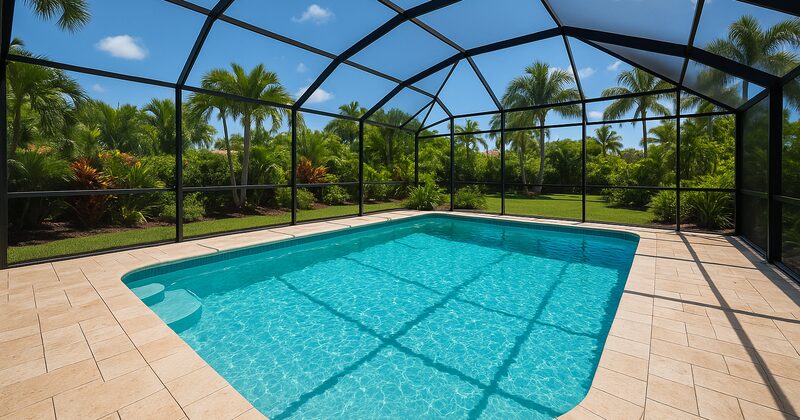
Getting rid of pool deck algae and mold for good is not about scrubbing harder or blasting the surface with more pressure. It is about breaking the cycle that lets the growth come back: clean the deck the right way with a low-pressure soft wash and the correct treatment, re-sand the joints, and then seal the surface so the pores close and algae has almost nothing to grip. On the Gulf Coast, where humidity, rain, shade, and splash-out never really let up, that clean-sand-seal cycle is the only thing that keeps a paver or travertine pool deck green-free for more than a few weeks at a time.
Why Sarasota and Manatee pool decks are algae magnets
If your pool deck turns green faster than your neighbor's up north, it is not your imagination and it is not neglect. Our climate is close to a perfect greenhouse for algae, mildew, and the black mold spores that settle into paver joints and travertine pores. A few local realities stack up against you here:
- Year-round humidity. Algae and mold need moisture, and in Sarasota and Manatee County the air rarely dries out. Even in our cooler months the mornings are damp, so the surface almost never fully dries between waterings.
- Frequent, heavy rain. Our summer afternoon storms soak the deck daily for months. Every downpour also drives sand out of the paver joints, opening up the exact gaps where organic growth takes root.
- Shade from screen cages and landscaping. A screened lanai cuts the sun and airflow that would otherwise dry and bake the surface. Add mature palms, hedges, and planting beds close to the deck and you get shaded, still, damp zones that stay green year-round.
- Constant splash-out and pool chemistry. Water sloshing out of the pool keeps the perimeter permanently moist, and the organic debris that lands in that wet band, from leaves to pollen to sunscreen, feeds the growth.
Put those together and you have a surface that is warm, wet, shaded, and constantly fed. That is why a deck you cleaned in spring can look grimy again by mid-summer. It is a climate problem, and it needs a climate-aware fix rather than a one-time scrub.
Why pressure-washing alone is a losing battle
Almost everyone starts by renting or buying a pressure washer and going after the green with maximum PSI. It feels satisfying, and the deck looks great for a couple of weeks. Then the algae comes back, often worse. Here is why chasing it with raw pressure is a treadmill you can never step off:
- It strips the joint sand. High pressure blasts the stabilizing sand out from between your pavers. Once those joints are open and empty, they hold moisture and debris, giving algae and weeds an ideal place to root. You have actually made the surface more hospitable to regrowth.
- It can damage soft pavers and travertine. Travertine is a natural stone with a porous, relatively soft surface, and older concrete pavers lose their hardened top layer over time. A tight, high-pressure fan tip can etch, pit, and leave permanent wand marks. Once you open up the surface texture, it grabs dirt and grows algae even faster.
- The pores and joints stay open. Pressure washing removes what is on top, but it does nothing to close the microscopic pores in the paver or stone. Those open pores are where mold spores lodge and where moisture sits. Within a few weeks in our humidity, the growth is right back because nothing changed underneath.
Pressure washing is a tool, not a cure. Done at the wrong pressure it is actively harmful, and even done carefully it only resets the clock instead of stopping the problem. That is the whole reason our approach to paver cleaning uses controlled, correct pressure and treatment rather than brute force.
The cycle that actually keeps algae and mold away
Keeping a pool deck clean for the long haul comes down to three steps done in the right order. Skip any one of them and the growth returns. This is the same process we follow on every pool deck we treat, whether it is pavers in Nokomis or a travertine lanai in Venice.
1. Soft-wash cleaning with the right treatment
Instead of trying to blast growth off, we lift it chemically. A proper low-pressure soft wash uses a cleaning solution that kills the algae, mold, and mildew at the root, including the spores you cannot see, and then a gentle rinse carries it away. Because the pressure stays low, the joint sand stays put and the paver or stone face is not etched. The goal is a deck that is genuinely clean and biologically reset, not just clean-looking for a fortnight. This is where killing the organism matters more than scrubbing the stain, and it is the foundation the next two steps build on.
2. Re-sanding the joints
Once the surface is clean and dry, we sweep fresh polymeric sand into the joints. Polymeric sand contains binders that harden when activated with water, so it locks the pavers together and seals off the gaps that algae, weeds, and ants exploit. Our summer rains wash ordinary joint sand out quickly, so re-sanding with the polymeric kind is essential on a Gulf Coast pool deck. Solid, full joints mean far less standing moisture and far fewer footholds for regrowth. Re-sanding is also the heart of any proper paver restoration job, because tight joints are what make a surface both stable and clean.
3. Sealing to close the pores
The final step is what actually changes the equation long term. A quality sealer penetrates and closes the pores of the paver or stone and locks the fresh joint sand in place. With the surface sealed, water beads and sheds instead of soaking in, debris rinses off easily, and algae and mold have very little to cling to. It does not make the deck immortal, but it dramatically slows regrowth and turns a monthly battle into occasional light maintenance. Our pool deck sealing service is built around exactly this outcome, and for natural stone we use the stone-specific approach described in our travertine sealing service so the stone stays protected and breathable.
Sealer does wear out in our climate, which is why we are upfront that this is a maintenance cycle rather than a one-and-done fix. If you want the details on timing, we cover it in our guide on how often to reseal, but the short version is that a pool deck here usually wants attention every couple of years.
Slip safety comes first around a pool
A pool deck has one requirement a driveway does not: it has to be safe under wet, bare feet. That single fact drives the finish we recommend. A high-gloss, wet-look sealer can look stunning and make paver colors pop, but it can also get slick when wet, which is the last thing you want at the edge of a pool where kids run and water is always splashing.
For that reason, on pool decks and lanais we favor a matte or low-sheen sealer, never a slick high-gloss. A matte finish still protects the surface, sheds water, and slows algae, but it keeps a natural, comfortable texture underfoot. When extra grip is warranted we can add a slip-resistant additive to the sealer. If you are weighing the look, our post on wet-look vs natural sealer walks through the trade-offs, but around a pool, safety wins over shine every time.
DIY methods that damage the stone
We understand the urge to reach for something strong when green stains will not budge, but several popular home remedies do lasting harm to a Gulf Coast pool deck. A few to steer clear of:
- Harsh acids. Muriatic acid and other strong acids will etch and discolor pavers and, especially, travertine and other natural stone. They can also disturb the balance of your pool water if they run off into it. The damage is often permanent and far more expensive to fix than the original stain.
- Overusing chlorine or bleach. A heavy bleach solution can kill surface algae, but repeated or concentrated use fades paver color, corrodes nearby metal and screen framing, and kills the landscaping it splashes onto. It also does nothing to close the pores, so the growth returns.
- Maximum-pressure blasting. As covered above, cranking the pressure strips joints and gouges soft surfaces.
- Random big-box sealers applied over a damp or dirty deck. Sealing in trapped moisture or live algae causes cloudy white haze and locks the growth in permanently, turning a cosmetic issue into a stripping-and-redo job.
The safe path is the boring one: kill the growth gently, rinse thoroughly, let the surface dry, and protect it with the correct product for that material. If you have questions about what is safe for your specific deck, our FAQ covers many of the common ones.
Simple homeowner maintenance between professional visits
Once your deck has been cleaned, re-sanded, and sealed, keeping it that way is genuinely easy. A little routine attention stretches the time between professional cleanings and keeps the algae from ever getting a foothold:
- Rinse the deck regularly. A quick hose-down, especially of the splash-out zone and any shaded corners, clears the pollen, dust, and organic film that algae feed on before it can establish.
- Keep organic debris off the surface. Blow or sweep away leaves, palm fronds, grass clippings, and berries promptly. Anything wet and organic left sitting on the deck becomes a mold starter patch.
- Trim back shade. Cut back the palms, hedges, and overhanging branches that keep parts of the deck dark and damp. More sun and airflow means the surface dries faster and grows less.
- Fix chronic wet spots. If a downspout, irrigation head, or low area keeps one section permanently soaked, redirect it. Standing water is where the green always starts.
- Watch for the early green. A light rinse and spot-clean at the first faint tint is a two-minute job. Waiting until the whole deck is green turns it into a full project.
None of this replaces the deep clean and re-seal cycle, but it makes that cycle last longer and keeps your deck looking good the whole time. Homeowners in humid, shaded spots along the coast, from screened lanais to poolside patios, get the most benefit from staying on top of these small habits.
The honest bottom line
You cannot pressure-wash your way out of a Gulf Coast algae problem, because the climate reloads the surface every single week. What works is breaking the cycle: a gentle, thorough soft-wash clean, fresh polymeric sand in the joints, and a matte, slip-conscious sealer that closes the pores and slows regrowth, backed by a little routine rinsing and trimming on your part. That is how a pool deck in Sarasota or Manatee County stays clean and safe for years instead of weeks.
If your pool deck keeps going green no matter what you try, we would be glad to take a look and give you a straight answer about what it needs. Request a free, no-obligation quote at /#get-a-quote and we will help you get ahead of the algae for good.
Get started
Request a free quote
Tell us what you need. No pressure, and a real person gets right back to you.