
Can You Seal Brand-New Pavers? How Long to Wait in Florida
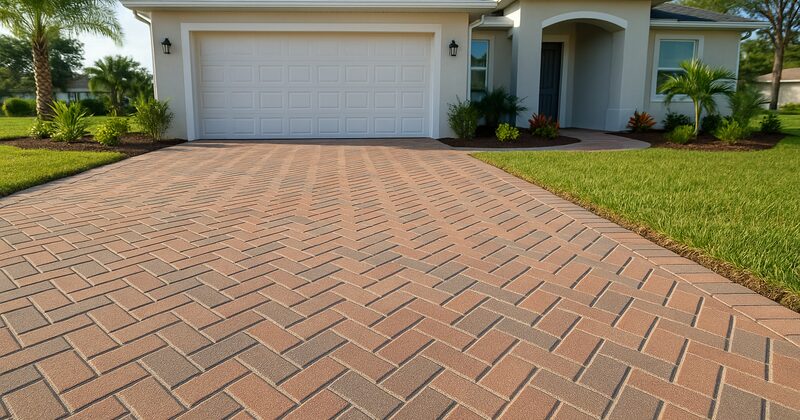
Yes, you can and should seal brand-new pavers - but not the week they go down. In Florida the safe move is to let a new install fully settle and let efflorescence (the natural white mineral haze that rises to the surface of new concrete pavers) finish coming out first, which commonly means waiting about 30 to 60 days, and sometimes up to 90. Seal at the right time and that first coat protects the color, locks the joint sand in, and makes the surface far easier to keep clean for years.
The short answer, and why "wait" is not the same as "never"
We get this question constantly, especially from homeowners in the new-construction communities all over Sarasota and Manatee County. The patio or driveway just went in, it looks perfect, and the natural instinct is to lock that fresh look in immediately with a coat of sealer. It is a good instinct. Sealing new pavers early in their life is one of the smartest things you can do for them, because you protect the color before the sun has a chance to fade it and you stabilize the joints before the first summer storms start washing sand out.
The catch is timing. Brand-new pavers are still doing two things right after installation, and sealing on top of that unfinished work is what causes the cloudy, blotchy, peeling messes we get called out to fix. So the honest answer is not "wait forever" and it is not "seal it tomorrow." It is "wait for two specific things to finish, then seal." Once you know what those two things are, the timing stops being a mystery.
The two things you are actually waiting on
There are really only two reasons to hold off on that first seal. Neither is about the pavers being fragile. They are about letting the surface reach the state it is going to stay in.
1. The installation needs to settle and cure
A fresh paver install is not fully "set" the day the crew leaves. The base and bedding sand continue to compact under foot and vehicle traffic, the joints take time to fully lock, and if the pavers are newer concrete units, the concrete itself is still curing and releasing moisture. Sealing traps whatever is happening at the surface at the moment you apply it. You want the surface to be in its settled, final, fully dry state before you lock it in.
2. Efflorescence needs to work its way out
This is the big one, and it is the reason most new pavers cannot be sealed right away. Efflorescence is a natural, harmless white or hazy mineral bloom that rises to the surface of new concrete pavers as they cure. Moisture inside the paver carries soluble salts and lime up to the face, the water evaporates, and the minerals are left behind as a chalky film. It can look patchy, like someone dusted flour across your new patio, and it can come and go for weeks as the pavers go through wet and dry cycles.
Here is the important part: efflorescence is temporary and it clears on its own as the pavers finish curing. But it has to come out before you seal, not after. If you seal while the pavers are still pushing minerals to the surface, you trap that haze under the coating, where it is very hard to remove. Manufacturers build this into their guidance for exactly this reason, and it is why "just cleaned and looks great today" is not the same as "ready to seal."
The typical waiting window in Florida
Nationally you will see advice ranging anywhere from a few weeks to a full year. For our climate and the concrete pavers most local builders install, the practical, honest window is usually this:
- About 30 to 60 days is the common range for a new install to settle and for the first heavy round of efflorescence to clear.
- Up to 90 days is not unusual, especially for denser pavers, larger installs, or when the weather has not cooperated.
- Longer in some cases. Some manufacturers still print "wait up to a year" on the box, and for certain products that is genuinely the conservative call.
Why the spread? Because efflorescence is driven by moisture moving through the paver, and we live in one of the most humid, rain-heavy corners of the country. Our afternoon summer downpours and year-round humidity keep pushing moisture through new pavers, which can extend how long the mineral haze keeps reappearing. A patio installed in the dry stretch from fall through spring may clear faster than one installed at the peak of the summer rainy season. This is the same reason our climate affects everything we do here, which is why we tell people the drier months are the ideal window for sealing in general. You can read more about the how-often-and-when side of that in our FAQ.
The point is that the calendar is a guide, not a rule. The pavers tell you when they are ready, not the date on the receipt.
How to tell your new pavers are ready to seal
Rather than counting days, look at the surface. New pavers are ready for their first seal when all of the following are true:
- Efflorescence has stopped reappearing. If you clean the haze off and it stays gone through a few wet-and-dry cycles - a couple of rains or a couple of morning-dew mornings followed by dry afternoons - the pavers have most likely finished blooming. If it keeps coming back after each rain, they are still curing. Keep waiting.
- The surface is genuinely clean. No lingering white film, no construction dust, no mortar smears from the install, no organic growth starting in shady spots.
- The pavers are fully dry. Not "dry on top an hour after a rain," but dry all the way through. In our humidity this can take longer than people expect, and sealing over trapped moisture is a classic cause of a cloudy finish.
- The install has settled. No obviously shifting or rocking pavers, joints holding their sand, edges secure.
When we come out to look at a new install, this is exactly the checklist we run. If the pavers pass, we seal. If they do not, we tell you to circle back rather than take your money for a job that will fail. We would rather do it once, correctly. A proper paver cleaning is always the first step regardless, both to confirm the efflorescence is truly done and to give the sealer a clean surface to bond to.
What goes wrong when you seal too early
This is not a theoretical risk. Fixing prematurely-sealed new pavers is one of the more common calls we get, often from homeowners whose handyman or a rushed contractor sealed a fresh install to "finish the job." Here is what happens when sealer goes down before the pavers are ready:
- You trap the haze. Any efflorescence still on or in the paver gets locked under the sealer. Instead of a temporary bloom that would have cleared on its own, you now have a permanent-looking white cloudiness sitting under a coating.
- You get a cloudy, blotchy finish. Trapped moisture and minerals make the sealer turn milky or patchy. What was supposed to enrich the color instead looks foggy and uneven, and it will not clear up on its own.
- You risk poor adhesion. Sealer needs a clean, dry, stable surface to bond to. Apply it over a surface that is still off-gassing moisture or still shedding mineral dust, and the coating can fail to grip, leading to peeling, flaking, or a tacky finish that never fully sets.
None of that fixes itself. The only real remedy is to chemically strip the failed coating off, neutralize and fully dry the pavers, and start over correctly. That is a genuine service we provide - sealer stripping and a proper re-seal - but it costs more than simply waiting would have. It is the definition of paying twice. Whenever we talk a homeowner out of sealing a too-new patio, this is the outcome we are saving them from.
If you have already been left with a hazy, white, or blotchy finish from an early or poorly-done seal, do not panic and do not scrub at it hoping it clears. It is very fixable once the old coating is properly removed. That is a different situation from cosmetic wear, and it is worth having someone who does this daily take a look.
The real benefits of that first seal, once the pavers are ready
Waiting is worth it because the first seal, applied at the right time, sets your pavers up for their entire life. This is not just cosmetic. A correctly-timed first seal does real structural and maintenance work:
- It locks the joint sand in from day one. This is the big one for new installs. Freshly-swept polymeric sand, sealed over while it is full and fresh, stays put. That means ants and weeds never get the loose, washed-out joints they need to take hold. You skip the cycle of pulling weeds and re-sanding after every storm that unsealed pavers put you through.
- It protects the original color. Our Gulf-coast sun is brutal on unsealed pavers. UV bleaches the color surprisingly fast. Sealing early, before the fading starts, preserves the rich just-installed look instead of trying to claw it back later. Locking in color from the start beats color-restoration down the road.
- It makes the surface far easier to keep clean. A sealed surface sheds water, resists oil and rust stains, and gives mold and algae much less to grip in our humid climate. Spills wipe up, the pressure-washer comes out far less often, and routine upkeep becomes a quick rinse instead of a project.
- It sets the maintenance clock in your favor. Get that first seal on at the right time and you are simply refreshing it every couple of years after that, rather than trying to rescue a surface that has already faded, shifted, and grown green.
If you are weighing the finish, this first seal is also when you choose the look you want to live with. We walk every customer through the wet-look vs natural sealer decision, because a matte natural finish and a glossy wet-look finish protect the pavers equally but read very differently in the sun.
Why this matters so much in our new-construction communities
Sarasota and Manatee County are in the middle of a genuine building boom, and a huge share of the calls we get are on pavers that are only months old. If you just moved into Wellen Park, Parrish, or Lakewood Ranch, your driveway, lanai, and pool deck pavers are almost certainly new enough that this timing question applies directly to you.
New-construction pavers are exactly the ones most at risk of being sealed too early, because everyone wants the fresh house to look finished, and because builders and general handymen are not paver-sealing specialists. We would much rather get a call from a new homeowner asking "are my pavers ready yet?" than a call six months later to strip a clouded coating off a patio that was sealed on move-in week.
The good news is that once your new pavers do clear their efflorescence and settle, that first professional seal is the single best thing you can do to protect a brand-new hardscape investment. Whether it is a driveway sealing on a fresh install or full paver restoration on pavers that have been down a while and need catching up, the same principle holds: seal clean, dry, settled pavers, and they reward you for years.
The bottom line
Seal your new pavers - just not before they are ready. Give the install about 30 to 60 days, sometimes up to 90 in our humidity, to settle and to push out its efflorescence. Watch for the haze to stop reappearing, make sure the surface is clean and fully dry, and then get that protective first coat on. Do it in that order and you protect the color, lock the joints, and make the whole surface easier to live with. Do it too early and you are looking at a strip-and-redo.
Not sure whether your new pavers have cleared their curing window yet? That is exactly the kind of thing we check for free. Tell us where you are and how old the install is, and we will give you an honest answer on whether to seal now or circle back. Request your free, no-obligation quote at /#get-a-quote and we will take a look.
Get started
Request a free quote
Tell us what you need. No pressure, and a real person gets right back to you.