
Why travertine pavers pit, flake, and powder - and what sealing can actually fix
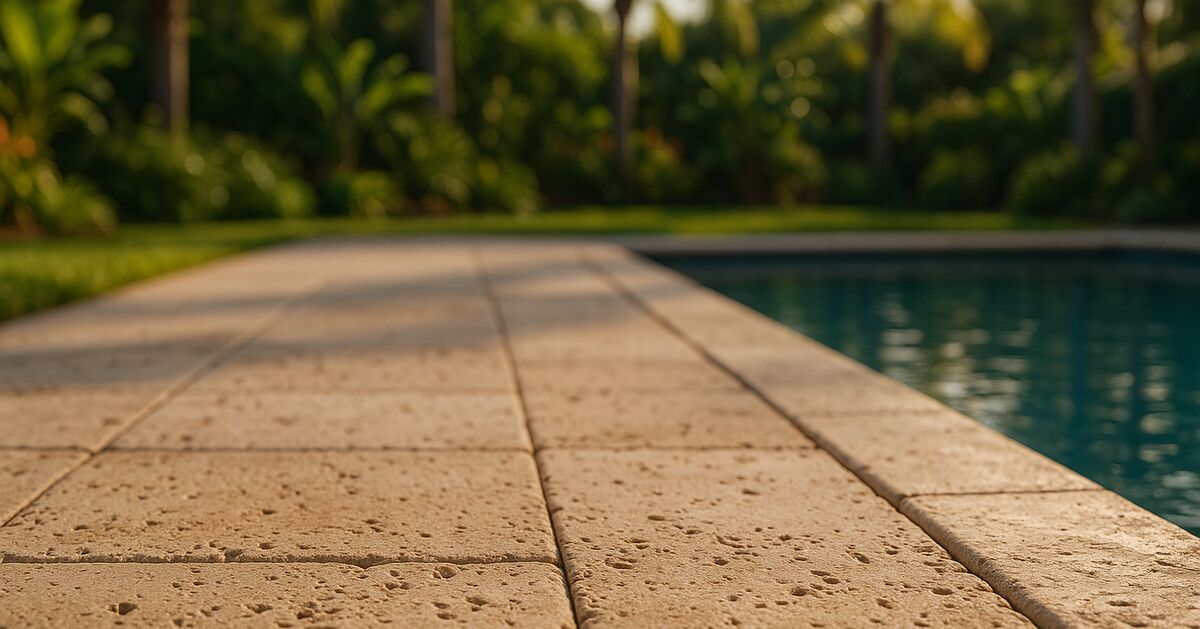
Travertine pavers look absolutely beautiful the day they're installed. That warm, creamy limestone surface fits right in with the Florida lifestyle, which is why you'll find them on pool decks, driveways, and lanais all across Lakewood Ranch, Wellen Park, and the wider Gulf Coast corridor. Then, two or three years in, homeowners start noticing something troubling: tiny pits opening up across the surface, corners flaking off, a chalky powder forming after rain, or the whole surface looking like it's slowly crumbling. That's not just cosmetic aging. It's the stone itself breaking down, and understanding why it happens is the first step to deciding whether you need cleaning, sealing, restoration, or something more.
What travertine actually is - and why that matters
Travertine is a sedimentary limestone formed by mineral-rich spring water depositing calcium carbonate over thousands of years. That formation process leaves natural voids and channels running through the stone. Cut into pavers, those voids are usually filled with grout or resin at the factory, and the face is honed or tumbled smooth for installation.
This natural porosity is both travertine's charm and its vulnerability. The stone is literally full of tiny holes and passages, which means liquids, salts, and acids can travel into the body of the paver very easily. On a dry countertop in a kitchen, that porosity is manageable. On a pool deck in southwest Florida, exposed to rain, pool water, sprinkler spray, Florida sun, and freeze-thaw cycles in the rare cold snaps we do get, that porosity becomes a real problem.
The specific damage patterns: what pitting, flaking, and powdering actually mean
Not all travertine damage is the same, and each pattern tells you something different about what's causing it.
Pitting is the most common complaint. Those small, rounded holes you see opening up across the surface are almost always the factory filler releasing or eroding. The resin or grout used to fill the natural voids expands and contracts at a different rate than the surrounding stone. Gulf Coast heat accelerates that cycle dramatically. Over a few years, the filler loosens, washes out, and leaves the original void exposed again. Once open, the pit collects water, algae, and cleaning chemicals, and the erosion picks up speed.
Flaking and spalling look more dramatic. Thin layers of the stone surface lift away, sometimes in sheets, sometimes in small chips at the corners and edges. This almost always has a moisture component. When water gets into the pores and then expands, either from heat turning it to vapor or from a rare cold night causing it to freeze, the pressure from inside the stone pushes outward. That pressure eventually overcomes the stone's tensile strength and a layer separates. Pool deck travertine is especially prone to this because it cycles through wet and dry states repeatedly every single day.
Powdering, sometimes called "sugaring" by stone professionals, is a sign of acid erosion. The calcium carbonate in travertine reacts with acids, and there are more acids around than most people realize: pool water that drifts out of range toward low pH, fertilizer runoff from lawn care, bird droppings, and even carbonic acid in ordinary rainwater. When acid touches the surface repeatedly, it slowly dissolves the calcium carbonate crystals and leaves behind a loose, powdery residue. Run your hand across an affected area and it looks almost like chalk dust. That's the stone's actual mineral structure coming apart.
Why Lakewood Ranch and Wellen Park are especially tough on travertine
Both communities are relatively young and were built with a lot of travertine. The master-planned neighborhoods, the outdoor-focused lifestyle, the newer construction, and the prevalence of large pool decks and paver driveways all mean travertine is everywhere here.
But the Gulf Coast environment is genuinely harsh on calcium-based stone. Consider what a typical year looks like for travertine pavers in these communities:
- Intense UV radiation from May through October heats dark grout lines and stone surfaces to temperatures that can exceed 150°F, accelerating expansion and contraction cycles.
- Heavy summer rain, sometimes several inches in a single afternoon, floods the surface and forces water into every open pore.
- Irrigation systems running on landscaping schedules mean some pavers never fully dry out between cycles.
- Pool chemicals, especially chlorine, splash and drift onto surrounding pavers. Pool water is also frequently slightly acidic after heavy rain dilutes the chemistry.
- Fertilizers applied to the lush lawns surrounding homes in both communities carry nitrogen compounds that, when wet, can produce mild acids on the paver surface.
None of these factors is catastrophic on its own. Together, working across years, they add up to significant stone breakdown.
What cleaning can and cannot do
A proper professional cleaning, done before any sealing work, accomplishes real things. It removes algae, mold, and mildew from the surface and from pores. It strips away old sealer residue that may be trapping moisture or blocking new sealer from bonding. It removes surface salts (efflorescence) that form white haze. It opens the pores so any sealer applied afterward can actually penetrate. For travertine that looks dull, stained, or covered in organic growth, a professional clean can produce a dramatic improvement in appearance.
What cleaning cannot do is reverse physical damage to the stone structure itself. A pitted surface is still pitted after cleaning. Flaked areas where stone has already separated are not repaired by cleaning. Powdered areas where the calcium carbonate has already dissolved are gone. Cleaning is preparation and maintenance, not restoration of structural damage.
This is an important distinction because some homeowners, after seeing how much better cleaned travertine looks, assume the underlying damage has been fixed too. It has not. The damage is now more visible, and more vulnerable to continuing unless the next step is done correctly.
What sealing can and cannot do
Here is where honest answers matter. Sealing travertine pavers is genuinely valuable, but it is not magic, and it does not reverse damage that has already occurred.
A good penetrating impregnating sealer, applied correctly to clean, dry travertine, does several important things:
- It fills the pores of the stone with a water-repelling compound that makes it much harder for water to enter. This directly reduces spalling and flaking because the moisture-expansion cycle that causes it is slowed dramatically.
- It slows the absorption of pool chemicals and fertilizer residue, reducing acid erosion.
- It helps stabilize any remaining factory filler in existing pits by reducing the moisture cycling around them.
- It makes the surface easier to clean, so algae and mold don't get a foothold as easily.
- In some formulations, it enhances or deepens the natural color of the stone.
What sealing cannot do is fill pits, reattach flaked layers, or replace calcium carbonate that has already been dissolved by acid. Those are physical voids and structural losses. Sealer will flow into a pit, but it will not level it. You will still see the pit. Flaked corners are still flaked after sealing. Powdered areas that have lost structural integrity may need the loose material removed and the surface addressed with a stone-appropriate filler before sealing can do any good.
The honest summary is this: sealing stops the damage from getting worse, and it stops it very effectively. It does not reverse what has already happened. For pavers with significant active damage, sealing is still absolutely the right move because leaving unsealed damaged travertine just lets the breakdown continue faster.
For background on what happens when sealer itself becomes part of the problem, our post on why stripping old sealer is sometimes the only real fix is worth reading before you commit to any resealing project on travertine that was previously sealed.
Can damaged travertine be restored?
Mild to moderate damage, yes, in many cases. Here is what restoration can realistically address:
Re-grouting or re-filling pits. Open pits can be filled with appropriate travertine filler or grout, matched to the stone color. This is labor-intensive but effective. The filler will not last forever in a high-moisture outdoor environment, but it extends the life and appearance of the pavers significantly and gives sealer a better surface to protect.
Honing or grinding. For surfaces with widespread shallow pitting, surface staining, or minor flaking, a professional stone restoration company can hone (lightly grind) the surface to remove a thin layer and expose fresh stone underneath. This is a specialized process, not standard paver sealing, and it requires diamond abrasives and skill. When done correctly, it can make significantly damaged travertine look remarkably good again. After honing, sealing is essential because the fresh surface is even more porous.
Heavy spalling with structural compromise. When pavers have lost significant material and the remaining stone feels soft or crumbles when you press on it, replacement of those individual pavers is usually the right answer. Trying to seal or fill structurally compromised stone just delays the inevitable. Replacing a few pavers while cleaning and sealing the rest is often the most cost-effective approach.
Our full overview of paver sealing and restoration services explains what a professional assessment covers and what restoration work typically involves.
The sealer type matters for travertine specifically
Travertine is not the same as concrete or brick pavers, and the wrong sealer choice can make things worse. A few principles to understand:
A penetrating (impregnating) sealer is almost always the right choice for travertine. These sealers soak into the pores and do their work from inside the stone without forming a thick film on the surface. They don't change the slip resistance, they don't trap moisture, and if they need to be replaced, re-application is usually straightforward.
Topical sealers (film-forming products) can be used on travertine, but they carry more risk. A thick film on a highly porous stone that still has some moisture movement can blister, peel, or cloud. Travertine around pools is especially vulnerable to this because moisture vapor moving up through the stone from below can lift a topical sealer from underneath.
The Gulf Coast climate also affects how sealer cures. High humidity and heat influence the application window and how long the sealer needs before it can get wet. Our dedicated post on how Gulf Coast heat and humidity affect paver sealer cure time covers this in detail, and the principles apply directly to travertine applications.
When to call a professional versus DIY
The honest answer is that for travertine in poor condition, the risk of a DIY sealing job going wrong is higher than for concrete pavers. Travertine is more sensitive to:
- Sealer applied when the stone isn't fully dry (traps moisture, causes clouding or blistering)
- The wrong sealer chemistry reacting with the calcium carbonate
- Uneven application leaving lap marks or dry spots in a porous stone that drinks sealer unevenly
- Cleaning products that are too acidic, which actively dissolves the stone surface
A professional cleaning and sealing job on travertine includes testing moisture content before application, choosing the appropriate sealer formulation for stone type and exposure, and knowing how to work with a surface that has uneven porosity due to pits and flaked areas.
If you are in Lakewood Ranch, Wellen Park, or anywhere else along the Gulf Coast service area, a professional assessment is worth doing before committing to a DIY project on damaged travertine. It may turn out your pavers are in better shape than they look, or it may turn out that a little restoration work before sealing will give you a dramatically better result.
The maintenance reality going forward
Even perfectly sealed travertine in southwest Florida needs attention. Penetrating sealers on outdoor travertine in our climate typically last two to four years before they need refreshing, depending on exposure, traffic, and how aggressively the surface is cleaned. Pool deck travertine at the wetter end of that range. Driveway or walkway travertine that stays drier may get the full four years.
Ongoing maintenance makes a real difference. Rinse pool deck travertine regularly to dilute pool chemical residue before it has time to etch. Keep sprinklers aimed away from paver surfaces where possible. Have the surface professionally cleaned and inspected every year or two even if you are not ready for a full reseal. Catching a pit before it gets deep, or catching early spalling before it spreads, is much less expensive than addressing widespread damage later.
If you have questions about what condition your travertine is actually in and what the realistic options are, our FAQ page covers many common situations, and you can always reach out directly for an on-site look. Seeing the pavers in person is always more useful than guessing from a description, and for travertine with active damage, getting an honest assessment early gives you the most options.
The short version: travertine pits, flakes, and powders in Florida because it is a porous calcium-based stone in a hot, wet, chemically active environment. Cleaning and sealing cannot turn back the clock, but they absolutely can stop the clock from running any faster. For pavers that still have good structural integrity, a professional clean and seal is one of the best investments a Gulf Coast homeowner can make.
Get started
Request a free quote
Tell us what you need. No pressure, and a real person gets right back to you.