
Why pool and lanai pavers sink or shift - and the real fix
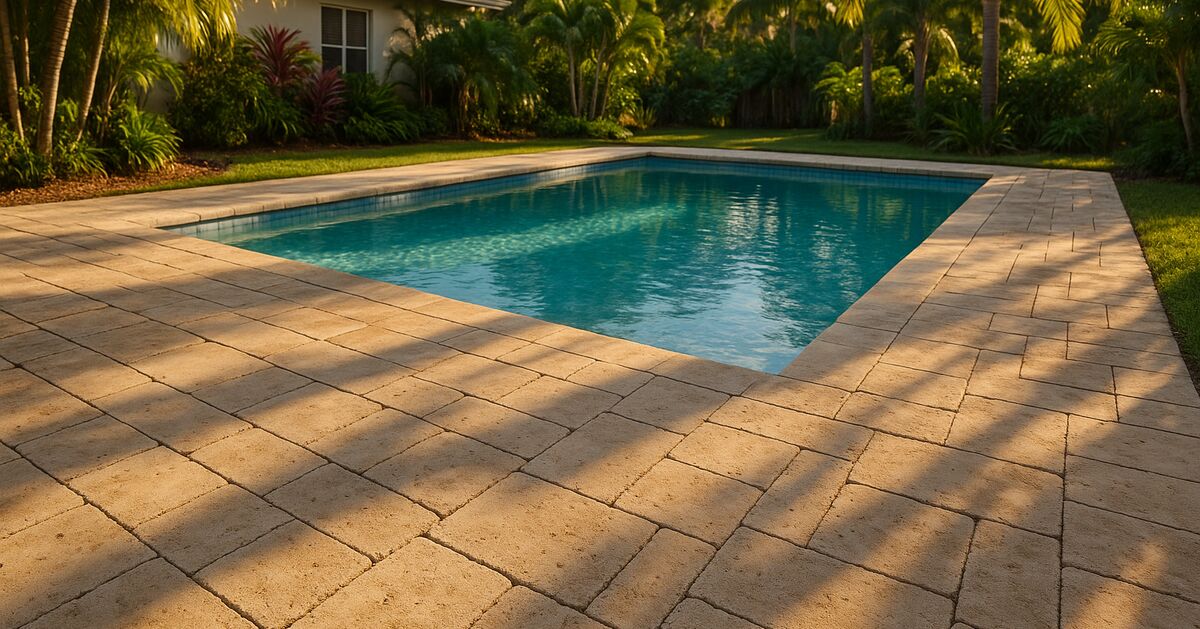
A single rocking paver at the edge of your pool can send a barefoot guest to the ground in seconds. Before you reach for a bag of sand or call a sealing company, it helps to understand exactly why pavers move in the first place - because the cause determines the cure, and the two most common fixes (re-sanding and sealing) do very different jobs.
What is actually happening under your pavers?
Pavers are a "flexible" paving system, which is intentional. Unlike a poured concrete slab, they are designed to move slightly with the ground beneath them. The system works like this: a compacted gravel base sits at the bottom, a layer of coarse bedding sand sits on top of that, and the pavers rest on the sand. Polymeric sand (or regular jointing sand) fills the gaps between pavers and locks them laterally.
When the system is installed correctly and the base stays intact, the pavers stay flat and tight for years. When something disturbs the base or the joint sand, the pavers begin to shift, sink, or rock. Around a pool or lanai in Southwest Florida, several things can trigger that disturbance.
The most common reasons pavers sink or shift around pools and lanais
1. Erosion from water runoff and pool splash-out
This is the number-one culprit in our area. Pool water splashes over the edge constantly during a normal swim. Rainwater - and Southwest Florida gets a lot of it, especially June through September - runs off the pool deck in sheets. If the joint sand between pavers is not locked in place, that water carries it away grain by grain. Once enough sand is gone, the pavers lose lateral support and start to rock and settle unevenly.
Poorly graded decks make this worse. If your lanai or pool deck doesn't slope slightly away from the pool and toward a drain or yard edge, water pools on the surface and finds its way down through the joints rather than running off. Over time, that standing water washes the bedding sand right out from under the pavers.
2. Florida's expansive soils
Much of the soil across Sarasota, Bradenton, Lakewood Ranch, Parrish, and the Venice/Nokomis corridor is a mix of sandy fill and clay-bearing subsoil. Clay expands when it absorbs water and contracts when it dries out. During a wet summer followed by a dry winter, that cycle of expansion and contraction can push pavers up in one spot and pull them down in another. If the base layer wasn't deep enough or well-compacted at the time of installation, this movement is even more pronounced.
3. Tree roots and vegetation
Lanai pavers that are close to mature trees or large shrubs are vulnerable to root intrusion. Roots follow moisture, and the bedding sand layer is a perfect pathway. A root the diameter of a finger can lift a paver half an inch over a couple of seasons. If you see a raised ridge running in a line across your deck, root intrusion is a likely suspect.
4. Pool deck construction settling over time
A newly installed pool deck goes through a settling period, sometimes for the first year or two. The base material compacts further under foot traffic and weather. Some minor settling is normal and expected. What's not normal is continued sinking years later, which points to an inadequate base depth or poor initial compaction.
5. Pressure washing damage
Aggressive pressure washing with the nozzle held too close to the joints can blast jointing sand out from between pavers in a single afternoon. This is a surprisingly common cause of shifting, and it's worth reading about the right way to pressure wash pavers before sealing them in Florida to understand how to clean without creating a new problem.
Does sealing fix sinking or shifting pavers?
Honestly, no - not on its own. Sealing is not a structural treatment. A sealer sits on top of the paver surface and penetrates slightly into the paver material itself. It does not bond pavers to the ground, stabilize a failing base, or replace missing joint sand.
That said, sealing plays a real supporting role in preventing further movement once the structural issues are addressed. Here is how:
- Sealing locks polymeric sand in place. A quality paver sealer applied over freshly installed polymeric sand helps harden and stabilize the sand in the joints, making it far more resistant to washout from rain and pool splash-out. This is one of the most overlooked benefits of sealing around a pool.
- Sealing reduces water infiltration. A sealed paver surface is less permeable than an unsealed one. Less water soaking down through the joints means less erosion of the bedding sand layer over time.
- Sealing makes cleaning easier. Algae, mold, and organic debris sit on top of a sealed surface rather than penetrating it, so routine cleaning is gentler and less likely to dislodge joint sand.
The important sequence is this: fix the structural problem first, then seal. Sealing over a deck where pavers are already shifting or joint sand is already depleted will not stop the movement. It may even trap moisture underneath if applied improperly, which can accelerate base erosion.
Re-sanding: when it is the right fix and what it involves
If your pavers are sinking or shifting because joint sand has washed away, re-sanding (often called joint sand replenishment) is the correct first step. Here is what that process typically looks like:
- Inspection. A good contractor will look at the joints across the entire deck, not just the spots that are obviously rocking. Thin or empty joints in one area often predict failure in adjacent areas within a season or two.
- Surface cleaning. The deck needs to be cleaned thoroughly before new sand goes in. Old organic material, algae, and debris in the joints will break down and allow sand to shift if not removed first.
- Re-leveling lifted or sunken pavers. If individual pavers have actually dropped below the plane of the surrounding deck, they need to be pulled up, bedding sand added or re-graded beneath them, and then reset. Pouring polymeric sand over a paver that is sitting a half-inch low does not fix the trip hazard.
- Polymeric sand installation. New polymeric sand is swept into the joints and compacted. Then it is activated with water, which triggers a binding agent in the sand to harden. When done correctly, the finished joints feel almost like thin grout lines and resist washout dramatically better than plain jointing sand.
- Curing period. Polymeric sand needs 24 to 48 hours to fully cure before sealing. Rushing this step is one of the most common causes of sealer haze and joint failure.
For a deeper look at whether your specific situation calls for cleaning, re-sanding, or sealing, the post on whether your pavers need resealing or just a deep clean first walks through the decision in plain terms.
When the problem is bigger than sand
Sometimes re-sanding is not enough. If multiple pavers across a large area have dropped, if you can see visible voids when you pull a paver up, or if the same areas keep sinking every year despite re-sanding, the base layer itself may be compromised. This calls for a more involved repair: pulling the affected pavers, excavating and re-compacting the base, adding base material if needed, resetting the bedding sand layer, and then re-laying the pavers. This is a bigger job, but it is still far less expensive and disruptive than breaking out a concrete slab.
If you are in Lakewood Ranch or Wellen Park, where a large share of homes are on younger construction pads and newer pool installations, settling-related sinking is especially common in the first three to five years after the pool is built. This is normal, but it needs to be addressed rather than ignored.
Why this matters more in Southwest Florida than most places
The Gulf Coast climate stacks the deck against paver stability in a few specific ways:
- Rain volume. Southwest Florida receives 50 to 55 inches of rain per year on average, most of it concentrated in intense summer afternoon storms. That volume of water hitting a pool deck repeatedly all summer is hard on jointing sand.
- High humidity and shade. Covered lanais stay damp for extended periods, which encourages algae and organic growth that degrades joint integrity.
- Salt air near the coast. Pavers and joint sand in areas closer to the Gulf, including Venice, Nokomis, and coastal Sarasota, are exposed to salt-laden air that can degrade unsealed surfaces faster than inland locations.
- Sandy fill soils. Much of the land in this region was formerly low-lying or was built up with fill material. Fill settles over time, and if the paver base was not installed with enough depth to account for that, movement will follow.
Our full list of service areas covers the range of conditions we see across Sarasota and Manatee counties, and the specifics genuinely vary neighborhood to neighborhood.
What the right sealer does after re-sanding
Once the structural work is done and fresh polymeric sand has cured, sealing is the smart final step. A penetrating sealer will:
- Bind the surface of the polymeric sand further, adding another layer of washout resistance
- Protect the paver surface from UV fading, which is aggressive in Florida's sun
- Make pool chemicals, sunscreen, and organic stains easier to clean off
- Reduce the rate at which new algae and mold establish themselves on the surface
If you are weighing which sealer finish to use on a pool deck, the comparison of wet-look versus natural paver sealers covers the practical tradeoffs. On pool decks specifically, slip resistance matters, and not all sealers handle that equally.
How to tell if your deck needs attention now
Walk your pool deck and lanai barefoot, slowly. Press down on each paver with your foot. Any paver that rocks, clicks, or feels hollow underfoot has lost contact with the bedding sand below it. Look at the joints: they should be full and firm, roughly level with the paver surface. Joints that look empty, crumbly, or that you can scratch out easily with a fingernail have lost their integrity.
If you find more than a handful of problem spots, or if the same areas have been re-sanded before and are soft again, that is a signal to have a professional assess whether the base itself needs attention.
Our team works with homeowners across Sarasota, Bradenton, Venice, Nokomis, Palmer Ranch, and Parrish on exactly these kinds of assessments. We can look at what is actually happening under and between your pavers and tell you honestly whether re-sanding, a base repair, sealing, or some combination is the right approach for your specific situation.
The short version
Sinking and shifting pavers around a pool or lanai are almost always caused by lost joint sand, base erosion, soil movement, or some combination of the three. Sealing alone does not fix those problems, but it plays a real role in preventing them from recurring after the structural work is done. The right sequence is: diagnose the cause, fix the base if needed, re-sand with polymeric sand, let it cure, then seal. Skip steps in that order and you'll be back to rocking pavers sooner than you should be.
If you're not sure where your deck stands, get in touch and we'll take a look.
Get started
Request a free quote
Tell us what you need. No pressure, and a real person gets right back to you.