
Why paver driveways get tire tracks and scuff marks - and whether sealing helps or hurts
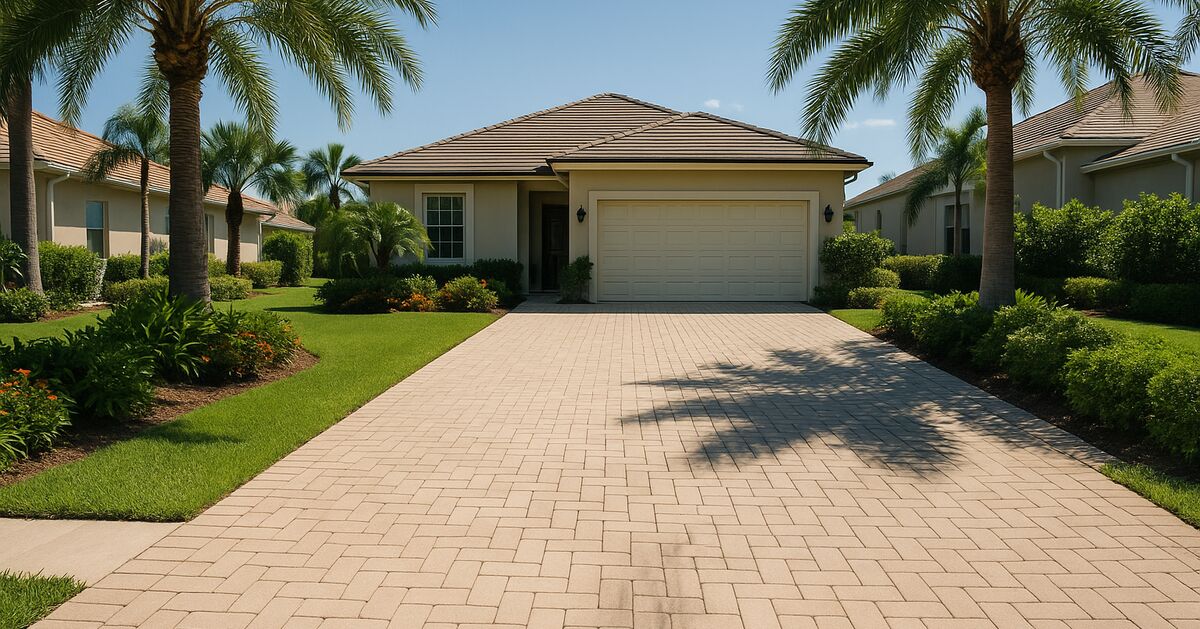
Tire tracks on a brand-new paver driveway are one of the most frustrating things a homeowner can discover - especially when the pavers looked perfect the day the installer left. If you live in Lakewood Ranch, Wellen Park, or anywhere else along the Gulf Coast and you are seeing dark rubber streaks, shiny scuff patches, or what looks like a ghost of every tire turn baked into your driveway surface, you are not alone and you are not doing anything wrong. The cause is almost always a combination of the specific paver material, the sealer that was (or was not) applied, and the way Florida heat changes the physics of everything.
This post breaks down exactly what is happening, which sealers make the problem worse, and what you can realistically do about it.
What actually causes tire marks on pavers
Rubber tire marks on concrete pavers are caused by a process called plasticizer transfer. Modern car tires are made with chemical plasticizers that keep the rubber flexible and grippy. When a tire sits on a hot surface, those plasticizers soften and migrate out of the rubber and bond to whatever the tire is resting on. On a plain concrete or asphalt driveway this is barely visible. On pavers, especially lighter-colored ones common in Lakewood Ranch and Wellen Park communities, it shows up as a dark, slightly shiny streak.
The Gulf Coast makes this dramatically worse. On a July afternoon in Sarasota or Bradenton, a driveway paver surface can reach 140 to 160 degrees Fahrenheit. At those temperatures, tire plasticizers transfer faster and bind more aggressively than they would in a cooler climate. The car does not even need to spin its wheels. Simply turning the steering wheel while stopped, or pulling out of a tight garage apron, generates enough friction and heat to leave a mark.
Scuff marks (the lighter, surface-level scratches that look like a dull haze) are a slightly different issue. These come from the physical abrasion of tire rubber dragging across the paver surface during turns. Concrete pavers have a texture that traps abraded rubber particles in the small surface pores. Unlike a smooth sealed surface that you can wipe clean, an unsealed paver holds that rubber debris in place.
Why some driveways are more vulnerable than others
Not all pavers are equally prone to tire marks. Several factors determine how badly yours will show them:
- Color. Light tan, cream, and white pavers show marks dramatically more than charcoal or dark brown ones. Many of the popular community palettes in Lakewood Ranch and Wellen Park feature light, warm tones that photograph beautifully in listing photos but show every scuff.
- Surface texture. Tumbled or brushed pavers have more surface relief, which actually traps less rubber than a smooth, machine-pressed face. Smooth-faced concrete pavers act almost like a printing plate.
- Paver density. Lower-density pavers are more porous and absorb plasticizers more readily. Premium pavers from reputable manufacturers tend to be denser and resist staining better.
- Driveway layout. Tight aprons, sharp turns from street to garage, and T-shaped turnarounds force steering-wheel movement while the car is nearly stopped, which is the worst-case scenario for tire marks.
- Vehicle type. Trucks, SUVs, and performance cars with wide, soft-compound tires leave more plasticizer behind than a small sedan on harder tires.
Does sealing prevent tire marks - or cause them?
This is the question that generates the most confusion, and the honest answer is: it depends entirely on the type of sealer.
Solvent-based sealers and the heat problem
Solvent-based acrylic sealers - the kind that produce a high-gloss or wet-look finish - are the most common choice for driveway pavers on the Gulf Coast. They penetrate the paver and form a film on the surface. That film is what gives the glossy appearance. In cooler climates, solvent-based sealers hold up fine under vehicle traffic. In Southwest Florida, they can become part of the problem.
When a sealed surface reaches 140-plus degrees, the acrylic film softens slightly. A softened sealer film is much more receptive to tire plasticizer transfer than a hard, cured paver surface. In effect, the hot sealer acts like a warm adhesive. The tire's plasticizers bond to the sealer film rather than (or in addition to) the paver itself. The result is a tire track that is darker, more defined, and harder to remove than what you would see on an unsealed paver.
This is why some homeowners report that their driveways looked fine for years with no sealer, then developed bad tire marks within weeks of sealing. The sealer was not defective. It was just the wrong type for a high-heat, high-traffic driveway application.
Water-based sealers behave differently
Water-based acrylic and polyurethane sealers form a harder, more heat-stable film than solvent-based acrylics. They are less likely to soften at high temperatures, which means they are less likely to bond aggressively with tire plasticizers. They also tend to produce a lower-sheen finish, which has the side benefit of making existing marks less visible.
If tire mark resistance is your top priority, a quality water-based sealer applied at the correct thickness is almost always the better choice for a driveway in Lakewood Ranch, Wellen Park, or anywhere else in our service area.
Penetrating (impregnating) sealers
Penetrating sealers do not form a film on the surface at all. They work inside the paver, filling pores and repelling liquids without creating a surface coating. Because there is no film to soften in the heat, they offer the best resistance to tire plasticizer transfer of any sealer type. The trade-off is that they do not change the appearance of the paver much, they do not enhance color, and they do not prevent physical rubber abrasion (scuff marks) because the paver surface itself is still exposed.
For homeowners who care primarily about protection and easy cleaning rather than a glossy look, a penetrating sealer is worth serious consideration for driveways. Our paver sealing and restoration services include both film-forming and penetrating options, and we walk through the trade-offs with every driveway client before a drop of sealer goes down.
What about marks that appeared before any sealing?
If your driveway was never sealed and you already have tire marks, the marks are embedded in the paver surface itself. This is actually the easier situation to treat in some respects, because you have not locked the staining under a sealer film.
Removing rubber plasticizer transfer from bare pavers typically requires:
- A degreasing cleaner designed for concrete (citrus-based or alkaline degreasers work well).
- Scrubbing with a stiff brush, not just pressure washing. Pressure washing alone pushes water but rarely removes bonded plasticizers.
- In stubborn cases, a light surface treatment with an appropriate solvent-based cleaner, followed by thorough rinsing.
After cleaning, sealing with the right product gives you a surface that is far easier to maintain going forward. A sealed surface, even a penetrating sealer, means future contamination sits on or just inside the sealer layer rather than bonding directly to the paver. That makes routine cleaning much more effective.
If you have tire marks under an existing sealer film, the situation is more involved. The sealer may need to be stripped before the stain can be reached and treated. We have written in detail about when stripping old sealer is the only real fix if you want to understand that process.
The cure time factor on Gulf Coast driveways
One thing that catches homeowners off guard is how critical the sealer's cure time is for driveway applications. A sealer that has not fully cured is essentially a soft, sticky film. Driving on it before it is hard enough to resist the friction and heat of a tire is a guaranteed way to create permanent tire tracks in the sealer itself.
Our area's heat and humidity make cure time harder to predict, not easier. High humidity can extend the cure window of water-based products. Direct midday sun can cause some sealers to skin over on the surface while the layers below are still soft. We have gone deep on this in our post on how Gulf Coast heat and humidity affect paver sealer cure time. For driveways, we recommend a minimum of 24 hours before foot traffic and at least 48 to 72 hours before vehicle traffic, with shaded or cooler conditions being safer than sunny afternoon cures.
Realistic expectations: sealing is not a tire-mark force field
No sealer makes a paver driveway completely immune to tire marks. What the right sealer does is:
- Make the surface easier to clean when marks occur.
- Reduce the frequency and severity of marks by limiting pore exposure.
- Protect the paver body itself from deeper staining.
A homeowner who does hard, tight turns on a light-colored driveway every single day in July is going to see some marks no matter what. The goal of sealing is to make those marks a routine cleaning task rather than a permanent eyesore.
Practical steps for Lakewood Ranch and Wellen Park homeowners
Here is a realistic action plan depending on where you are starting from:
If your driveway is unsealed and has existing tire marks: Clean first, seal second. Do not trap the staining under a sealer film. Use a proper degreaser, scrub thoroughly, rinse well, and let the pavers dry completely before sealing. In our area's humidity, that drying period is longer than most people expect - often two to three days of dry weather minimum.
If your driveway is sealed and the tire marks appeared after sealing: The sealer type may be part of the problem. Have the sealer evaluated. If it is a heavy solvent-based acrylic coat applied too thickly, stripping and resealing with a more appropriate product may be the right answer.
If your driveway is unsealed and you want to prevent marks before they start: Choose a water-based sealer or penetrating sealer over a solvent-based gloss product, especially if your driveway layout involves tight turning. Discuss the specific product with your sealing contractor before committing. We cover details for homeowners across our Gulf Coast service locations and the right product choice varies by paver type, not just geography.
For ongoing maintenance: Mild rubber marks on a properly sealed driveway can often be cleaned with a citrus degreaser and a deck brush, no pressure washer required. Keeping up with cleaning prevents light marks from baking in and becoming permanent between resealing cycles.
A note on driveway layout and long-term planning
If you are planning a new paver driveway or a major renovation in Lakewood Ranch or Wellen Park, the layout design itself is worth thinking about from a tire-mark standpoint. A slightly wider apron, a gentler turning radius from street to garage, or even a small paver pad that breaks up the standard turning path can reduce the number of tight, stationary turns your tires make on the same spot every day. That is a paving contractor conversation, but it is worth having.
The pavers, the sealer, and the layout all work together. Getting one right while ignoring the others leaves money on the table.
When to call a professional
If you are in Lakewood Ranch or Wellen Park and dealing with tire marks that have not responded to basic cleaning, or if you have sealer that may have been applied incorrectly or at the wrong time, it is worth getting a professional set of eyes on the driveway before you spend money on a fix that misses the root cause. The right diagnosis almost always saves money compared to cycling through cleaning products or sealer products that were not matched to your actual situation.
Our FAQ page covers many of the questions we hear most often about sealing and staining, and you are always welcome to reach out directly if you have a specific situation that does not fit a tidy category. Tire marks on driveways are one of the most common calls we get from communities across Sarasota, Bradenton, Venice, Nokomis, Palmer Ranch, and Parrish - and the solution is almost always straightforward once you know what you are dealing with.
Get started
Request a free quote
Tell us what you need. No pressure, and a real person gets right back to you.