
Why CDD community pavers wear out faster - and what HOA restoration involves
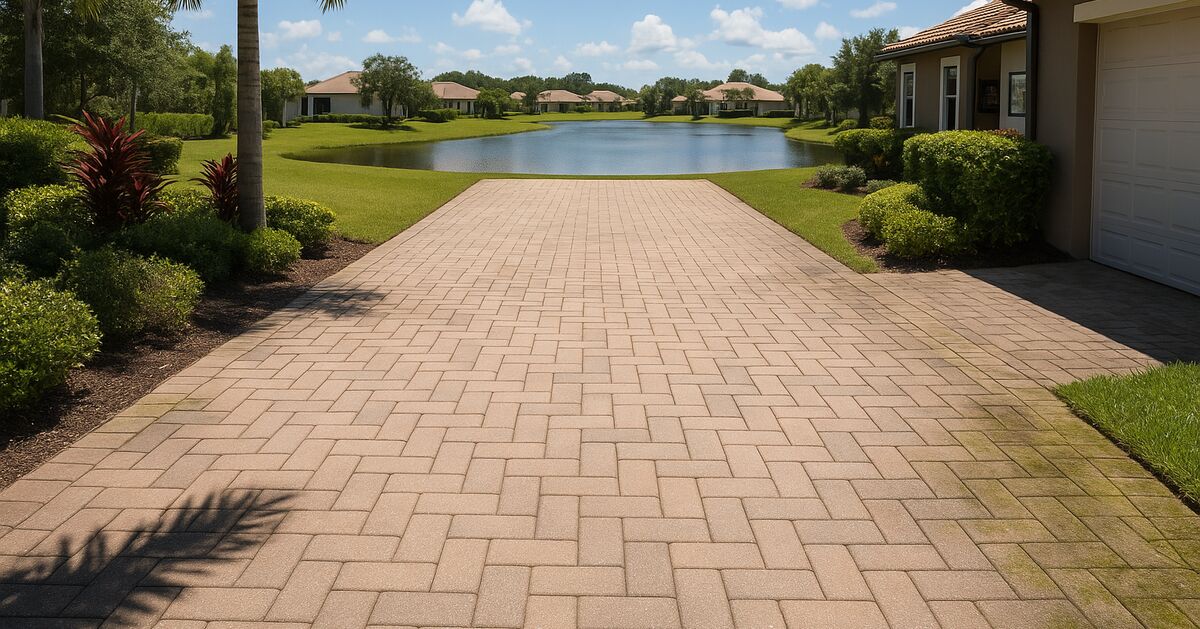
Pavers in Lakewood Ranch and Wellen Park communities can look a decade older than their actual age, and that is not an accident. The very things that make these master-planned communities so appealing - dense foot traffic, shared landscaping infrastructure, frequent irrigation, and strict aesthetic standards - also create a perfect storm of conditions that chew through paver surfaces faster than nearly any other residential setting on the Gulf Coast.
If you have been staring at your driveway or lanai wondering why everything looks so faded and sandy already, this post is going to explain exactly what is happening and what a proper, HOA-compliant restoration actually involves step by step.
What makes CDD communities different from ordinary neighborhoods
A Community Development District is not just a homeowners association with extra paperwork. CDDs in Florida are special-purpose government entities that manage roads, drainage, amenity centers, and common-area landscaping. What that means practically for a homeowner in Lakewood Ranch or Wellen Park is that your property sits inside a dense, highly engineered drainage and irrigation network.
Every home in these communities is tied into a controlled water management system. Retention ponds, swales, underground pipes, and automatic irrigation zones all move water around your property on a schedule that no individual homeowner controls. That water ends up on your pavers constantly, not just when it rains.
Lakewood Ranch alone spans multiple villages - Summerfield, Greenbrook, Central Park, Lorraine Lakes, and others - each built in different eras with different paver materials and installation standards. Wellen Park, including the older West Villages sections and the newer Downtown Wellen area, has similarly mixed paver vintages sitting side by side. The result is that what looks like "new" hardscape in your neighbor's driveway may actually be five or eight years old - and in these communities, five years of CDD life is a lot of wear.
The five conditions that accelerate paver wear in planned communities
1. Irrigation overspray hits every single day
HOA and CDD irrigation systems are calibrated for turf and landscaping, not for hardscape. Rotary heads and spray heads routinely hit driveways, walkways, and pool decks. In Lakewood Ranch and Wellen Park this happens every day or every other day through most of the year. That constant low-level moisture keeps the paver surface wet far longer than a rainstorm would, giving algae, mold, and efflorescence a long window to develop. Joint sand washes out incrementally with every cycle. Over a few years, this daily drip-and-evaporation cycle leaves mineral deposits, biological growth, and hollow joints that would take much longer to develop in a non-irrigated yard.
2. Shared drainage keeps subsurface moisture elevated
Because CDDs manage drainage at a community scale, the subsurface moisture levels under your pavers are not fully in your control. Retention pond levels, swale grades, and underground pipes all influence how wet the ground under your base material stays. When subsurface moisture is chronically elevated, the bedding sand under the pavers stays damp, which softens the base slightly over time and accelerates efflorescence - the white mineral haze that appears on the surface of concrete-based pavers as calcium migrates upward with evaporating water.
3. Dense traffic on shared corridors
CDD neighborhoods are designed for walkability. Wide sidewalks, pocket parks, golf cart paths, and amenity connectors run right through residential zones. The pedestrian and cart traffic that passes through these spaces is far higher than in a typical single-family subdivision. Driveways sit adjacent to busy neighborhood roads where delivery trucks, landscape crews, and garbage services make multiple weekly visits. Heavy rolling loads on pavers that are already softened by moisture cause rocking, settling, and surface abrasion that you simply do not see as often in lower-traffic settings.
4. Professional landscape crews work weekly on tight schedules
Every HOA and CDD in the area contracts landscape maintenance, and those crews are efficient. They are also blowing debris, trimming edges, and operating equipment across paver surfaces constantly. Leaf blowers scatter fine organic material into paver joints. String trimmers occasionally nick paver edges. Equipment wheels leave marks. None of this is malicious - it is just the reality of shared-community maintenance at scale.
5. Florida sun is unforgiving and these homes have no tree canopy yet
Many Wellen Park sections and newer Lakewood Ranch villages like Waterside are only a few years old. The trees are still young. Full-sun exposure on Southwest Florida pavers - with UV index readings that routinely top 10 or 11 from April through October - bleaches concrete pavers and accelerates the breakdown of any existing sealer. Older Lakewood Ranch communities have more canopy, but their pavers are also older and may have had only one sealing application years ago.
What "worn out" actually means and when it matters
There is a difference between pavers that look tired and pavers that are structurally compromised. Understanding the difference saves you money and keeps you out of trouble with your CDD architectural review board.
Surface fading is the most common complaint. Concrete pavers lose their pigment tone over time as UV radiation breaks down the coloring compounds near the surface. A quality penetrating or film-forming sealer with UV inhibitors slows this process significantly, but most pavers in Lakewood Ranch and Wellen Park were never sealed after installation - builders rarely include sealing in their hardscape budgets.
Biological staining from algae, mold, and mildew is extremely common in our climate. It appears as dark greenish-gray patches, often worst on north-facing or shaded sections. It is not just cosmetic. Algae creates a slick surface that is a genuine safety hazard, particularly on pool decks and entry walkways.
Joint sand loss is structural, not cosmetic. When the sand between pavers erodes out, individual pavers rock slightly under foot or wheel load. Over time that rocking causes edge chipping and accelerates surface abrasion. It also creates gaps where weeds establish easily.
Efflorescence and white haze is common in the CDD environment because of the elevated subsurface moisture we described above. It can look alarming but is often treatable without full replacement.
For a deeper look at how moisture and biological growth behave on pool and lanai surfaces in our region, the post on how to get rid of pool deck algae and mold for good on the Gulf Coast covers the chemistry in plain terms.
What HOA-compliant restoration actually involves
This is where homeowners often get tripped up. They hire someone to clean and seal their pavers, the work gets done, and then the CDD sends a letter about the appearance or the contractor's process. Here is what a proper, compliant restoration looks like in communities governed by architectural standards.
Step 1: Check your CDD and HOA architectural guidelines before anything else
Lakewood Ranch's various CDDs (Lakewood Ranch CDD I through IX, plus the newer districts) each have their own deed restrictions and architectural review processes. Wellen Park's CDD has its own standards as well. Some prohibit certain sealer finishes (glossy wet-look sealers are sometimes flagged for not matching community character). Others require that you notify the architectural review committee before any exterior modification, even a maintenance one.
Read your documents or call your community manager before scheduling work. This is not optional. Restoration done with an unapproved sealer finish can result in a violation notice requiring you to strip and redo the work.
Step 2: A proper cleaning - not just a pressure wash
Effective paver restoration starts with cleaning that addresses what is actually on the surface. In CDD communities that means addressing all of the following:
- Organic growth (algae, mold, mildew) with an appropriate biocidal treatment, not just high-pressure water which can spread spores and drive them deeper into joints
- Efflorescence with a mild acidic treatment that dissolves the calcium carbonate without etching the paver surface
- Oil or tire marks from driveways with a degreaser applied before the main wash
- Loose joint sand and debris blown out of joints before re-sanding
Pressure alone does not fix any of these properly. A cleaning process that skips chemical treatment will leave live spores and minerals in the paver, guaranteeing that the problem returns faster after sealing.
Step 3: Joint sand restoration
After cleaning and before sealing, every joint needs to be assessed. In most CDD community driveways and walkways that are four or more years old, the original joint sand has partially washed out and needs to be replenished or replaced entirely with polymeric sand.
This step matters enormously because sealer locks in whatever is in the joint. If you seal over depleted joints, you are sealing instability into the surface. The pavers will continue to rock and the sealer will crack at the joint lines.
Our post comparing regular sand versus polymeric sand options before sealing goes into the trade-offs in detail and is worth reading before you make that decision.
Step 4: Choosing a sealer that passes architectural review
This is the step where HOA compliance becomes most concrete. Sealer choices generally fall into a few categories:
- Matte or natural-finish sealers - These enhance color slightly and provide protection with minimal sheen. They are the most commonly approved finish in planned communities because they do not visually change the hardscape character.
- Wet-look or gloss sealers - These create a noticeably shiny surface. Some CDD architectural standards consider this a visual modification and require approval. Some prohibit it outright on driveways visible from the street.
- Enhancer-gloss sealers - These deepen the color significantly and add moderate sheen. They sit between the two above categories and may or may not be flagged depending on your specific CDD.
The sealer also needs to be appropriate for Florida's heat and humidity cycle. A product that cures beautifully in a controlled climate can bubble, cloud, or peel here if applied on the wrong day or at the wrong temperature. That problem is covered thoroughly in our post on how Gulf Coast heat and humidity affect paver sealer cure time.
Step 5: Application and curing - the part most DIYers underestimate
Professional sealer application in a CDD community requires keeping the product off adjacent landscaping, shared sidewalks, and curbs. It also requires managing traffic during curing. Most sealers need 24 to 48 hours of no foot traffic and 72 hours before vehicle traffic. In an HOA community where your driveway may be the only access to your garage and landscape crews or delivery vehicles arrive without warning, coordinating that curing window matters.
Applying too much sealer is as problematic as applying too little. Thick applications trap moisture underneath, which causes the white haziness that homeowners sometimes report after sealing. Our paver sealing and restoration services include proper mil-thickness application and a post-cure inspection to catch any issues before they become violations.
What happens when restoration is skipped too long
The longer worn pavers go unaddressed in a CDD community, the more the restoration options narrow. Pavers with deeply eroded joints begin to shift and rock, which creates lippage (uneven edges between adjacent pavers) that is a tripping hazard and a structural problem no sealer can fix. At that point, a portion of the pavers need to be lifted, the base re-leveled, and the pavers reset before any surface treatment makes sense.
Severely stained pavers that have absorbed years of organic material may require a deep chemical cleaning treatment or even light mechanical abrasion before sealing will adhere properly. And if an old sealer was applied years ago and has since clouded or peeled, that sealer needs to be stripped before anything new goes on top - you cannot seal over a failing sealer and expect the new coat to perform.
Serving homeowners across Lakewood Ranch, Wellen Park, and neighboring communities
We work with homeowners throughout the communities these CDDs serve, including paver restoration in Lakewood Ranch across its many villages, sealing and restoration in Wellen Park in both the established West Villages sections and the newer Downtown Wellen area, and in neighboring communities including Venice, Nokomis, Sarasota, Bradenton, and Palmer Ranch.
If you are in one of these communities and unsure where your pavers stand, our frequently asked questions page covers many of the common questions about timing, process, and what to expect. Or you can reach out directly for a straightforward assessment with no pressure.
Worn-out looking pavers in a Lakewood Ranch or Wellen Park community are almost never the result of bad materials. They are the result of the specific conditions these communities create - daily irrigation, managed drainage, heavy shared-area traffic, and Florida's relentless sun. Understanding those conditions is the first step to fixing the problem the right way, and keeping the CDD's architectural review board happy in the process.
Get started
Request a free quote
Tell us what you need. No pressure, and a real person gets right back to you.