
How Often Should You Reseal Pavers in Southwest Florida?
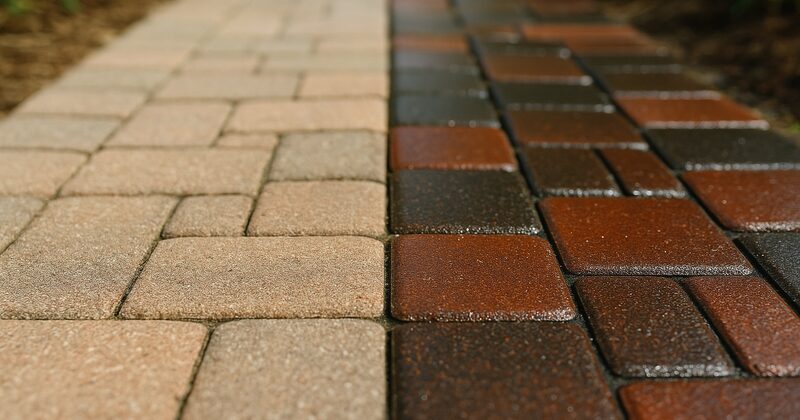
Here on the Sarasota and Manatee County Gulf coast, plan on resealing your pavers every two to three years, not the three to five years you will see quoted in national articles. Our climate is simply harder on sealer than most of the country, so the coating that protects your driveway or pool deck wears out faster. Below we break down why the local timeline is shorter, how it shifts depending on the surface, the concrete signs it is time to reseal, and why we treat sealing as a repeat maintenance item rather than a one-and-done job.
The Short Answer: Every 2 to 3 Years on the Gulf Coast
If you have read a few paver-sealing articles online, you have probably seen "reseal every three to five years" repeated like a rule. That number is a national average, written for the whole country. It does not account for what a Southwest Florida summer does to a sealed surface.
In our experience treating driveways, pool decks, and lanais across Sarasota and Manatee County, most surfaces need a fresh coat every two to three years. Some full-sun, heavy-use areas need it closer to every two. A few shaded, protected walkways can stretch a little past three. But if you are budgeting and planning, the two-to-three-year window is the honest number for our region.
That is not a sales pitch. It is what the sun, rain, and humidity here actually do to a sealer, and it lines up with what we tell every customer who asks in our FAQ. The good news is that once you know the real cadence, you can stay ahead of it instead of letting a surface degrade to the point where it needs a full restoration.
Why Our Climate Breaks Sealer Down Faster
Sealer is a sacrificial layer. It is designed to take the abuse so your pavers do not. The question is simply how fast that layer gets used up, and here on the Gulf coast, several forces gang up on it at once.
Intense Gulf Sun and UV
The same sunshine that fills our lanais and pool decks is brutal on a protective coating. Ultraviolet light is what breaks down the resins in sealer and fades paver color. A driveway in Bradenton or Sarasota that bakes in direct sun all afternoon is getting far more UV exposure per year than a comparable surface in Ohio or Pennsylvania. Even sealers labeled UV-stable are slowly being spent every sunny day, and we get a lot of sunny days.
Heavy Summer Rain
From roughly June through September, our afternoon storms dump serious volumes of water in short bursts. That drives water into the joints, washes at any loose sand, and keeps the surface saturated. Repeated wet-dry cycling stresses the sealer film and accelerates the washout of joint material, which is one of the first things to fail on an aging seal. It is a big reason we re-sand joints with polymeric sand as part of most jobs during paver cleaning and sealing.
Year-Round Humidity
Most of the country gets a real winter that dries things out and slows biological growth. We do not. Our humidity stays high nearly year round, which means the conditions that grow mold, mildew, and algae almost never switch off. Constant moisture also keeps working at the sealer itself. A coating that might last five years in a dry climate simply does not get the same break here.
Constant Algae and Mold Pressure
Green and black growth is the signature Florida paver problem. Warmth plus moisture plus shade equals algae and mildew, and we have all three in abundance. Sealer slows that growth by closing up the porous surface the organisms cling to, but as the sealer thins and wears, the growth comes back faster and faster. When you see green returning quickly after a cleaning, the sealer is telling you it is nearly done.
Salt Air Near the Coast
If you are out on or near the water in places like Longboat Key, Siesta Key, or the barrier islands, salt air adds one more stressor. Salt is abrasive and corrosive, and the constant fine spray works at surfaces in ways an inland home never deals with. Coastal properties often sit right at the shorter end of the resealing window for this reason.
Put all of that together and it is easy to see why the national three-to-five-year figure does not survive a couple of Southwest Florida summers.
How the Timeline Changes by Surface
Not every paver surface at your home wears at the same rate. The two biggest factors are how much direct sun a surface gets and how much traffic or water hits it. Here is how the cadence typically shakes out.
Driveways: On the Shorter End
Paver driveways usually take the most punishment. They sit in full sun, they carry vehicle weight and tire scrub, they collect oil drips, and their broad joints are exposed to every downpour. A driveway is often the first surface at a home to look faded and to lose its water bead. For most homes, driveways land right around the two-to-three-year mark, sometimes sooner if they face south or west with no shade. Our driveway sealing service is built around exactly this cycle.
Pool Decks and Lanais: Also Shorter
Pool decks and screened lanais are the other fast-wearing surface, but for different reasons. Constant splash-out, chlorine, humidity, and shade combine to grow algae and mildew in the joints and to keep the surface working overtime. Even inside a screen enclosure, the moisture load is relentless. These surfaces generally need attention on a similar two-to-three-year rhythm, which is why pool deck sealing is one of our most-requested jobs. If your deck is natural stone rather than concrete pavers, the products differ, and you will want to look at our travertine sealing approach, which uses a breathable, stone-safe sealer on its own schedule.
Shaded Walkways and Covered Patios: A Little Longer
Surfaces that stay out of direct sun and see light foot traffic are the ones that can stretch the timeline. A walkway shaded by mature oaks, or a covered patio protected from both sun and driving rain, may hold its seal past the three-year point. The trade-off is that shade encourages more algae and mildew, so while the sealer chemistry lasts longer, you may see more green growth pressure in the meantime. It is a balance, and it is exactly the kind of thing we assess surface by surface rather than assuming.
Because a single property often has all three of these surfaces, it is common for us to recommend resealing the driveway and pool deck a cycle sooner than a shaded side walkway. We would rather tell you that than reseal everything on the same day just because it is convenient.
The Concrete Signs It Is Time to Reseal
You do not have to track the calendar perfectly. Your pavers will show you when the seal is wearing out. Here is what to watch for.
- The color looks faded or chalky. A healthy seal keeps paver color rich and slightly deepened. When the surface starts looking washed out, pale, or dusty and chalky, UV has been working on an aging coating.
- Water no longer beads. This is the easiest at-home test. Splash some water on the pavers. On a good seal, it beads up and sits on the surface. When it soaks straight in and darkens the paver, the protective film is spent.
- Joint sand is washing out or loosening. If you notice sand tracking onto the surface, gaps opening at the joints, or grit collecting at the bottom of your driveway after a storm, the seal that was locking that sand in place has failed. Left alone, this invites weeds and ants.
- Green or black growth returns quickly. If algae and mildew come roaring back within weeks of a cleaning, the surface has lost the sealed barrier that was slowing them down.
- Stains soak in instead of sitting on top. Oil, leaf tannin, rust, and grime that used to wipe or wash off are now setting into the paver. That means spills are reaching bare, porous concrete again.
Any one of these on its own is worth a look. Two or three together is a clear signal that the surface is due. If you want a deeper walk-through of the whole process, our sibling posts on what paver sealing costs and wet-look vs natural sealer are useful companions to this one.
The Maintenance Mindset: Sealing Is a Repeat Item
Here is the single most important shift in thinking we can offer: sealing pavers is maintenance, not a permanent fix. It belongs in the same mental category as repainting trim, servicing the AC, or replacing pool filters. You do it, it protects your investment for a couple of years, and then you refresh it.
Homeowners sometimes feel let down when they learn a seal does not last a decade. We understand the reaction, but the honest truth is that a sealer promising to outlast our climate is either overselling or setting you up for a cloudy, peeling mess when it fails unevenly. The realistic, better path is a simple, predictable cycle: clean, re-sand, seal, and refresh every two to three years before the coating fully breaks down.
Staying on that cycle is far cheaper and easier than letting a surface go. When you reseal on schedule, each visit is mostly a clean and a fresh coat. When you wait until the pavers are badly faded, weedy, and washed out, the job becomes a full restoration, which is more labor and more cost. Maintaining the seal is how you avoid ever needing the big rescue job.
We Tell You Where Your Surface Actually Stands
We want to be direct about how we operate, because the paver world has its share of pressure tactics. When we look at your driveway or pool deck, we tell you honestly where it is in its life. If your surface still beads water, holds its color, and has tight joints, we will tell you it is not due yet and to call us next season. We are not going to talk you into resealing pavers that are still doing their job.
That honesty is why the two-to-three-year window is a planning range, not a hard rule we apply blindly. Your south-facing driveway in Lakewood Ranch and your shaded courtyard in Venice are not on the same clock, and we treat them accordingly. Our crew would rather earn a long relationship by being straight with you than squeeze in one unnecessary job.
Ready to Find Out Where Your Pavers Stand?
If your pavers are looking faded, water is soaking in instead of beading, or the green is coming back fast, it is probably time to take a closer look. We serve homeowners across Sarasota and Manatee County, and we are happy to assess your surface and tell you honestly whether it is due or whether you can wait. Request a free, no-obligation written quote at our quote form, and our crew will help you get on a sensible schedule that keeps your hardscape protected through the next few Florida summers.
Get started
Request a free quote
Tell us what you need. No pressure, and a real person gets right back to you.